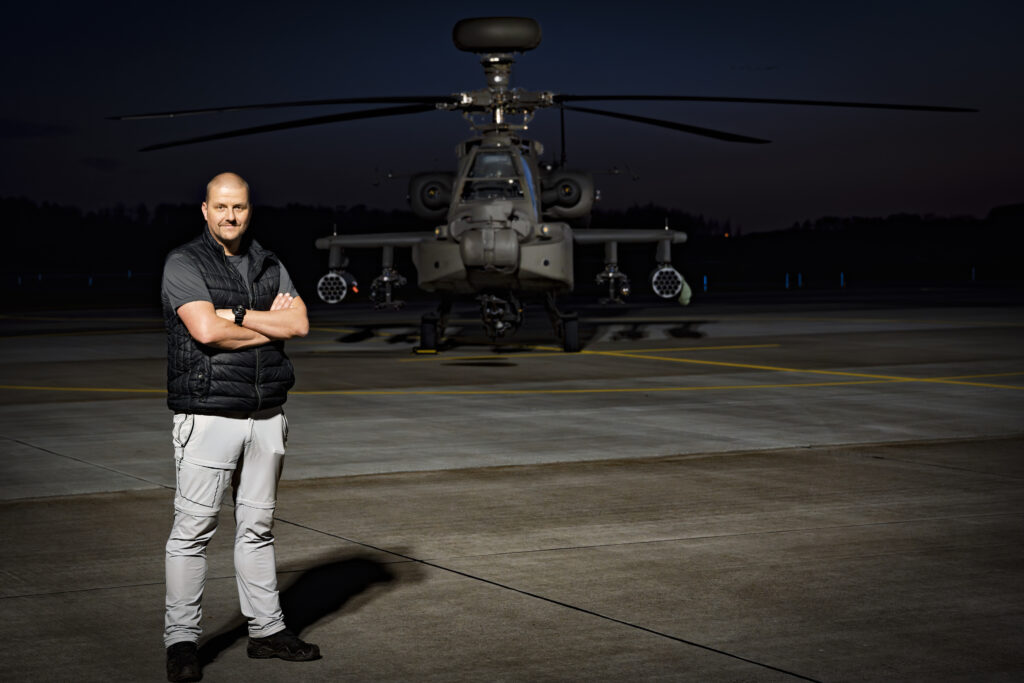
The Redskins Level up
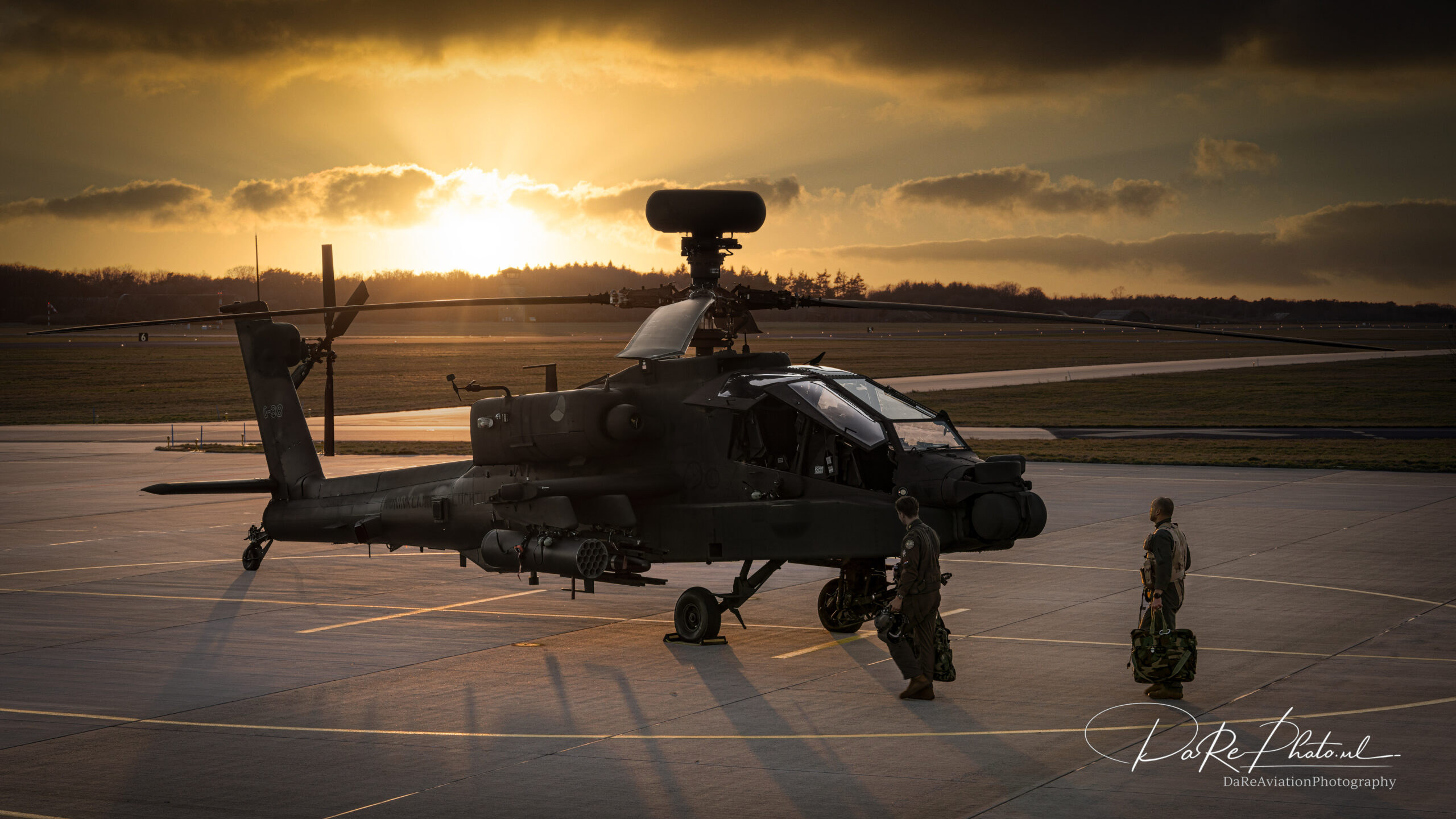
“A new generation of Apache: how 301 Squadron is adapting to the modern threat landscape”
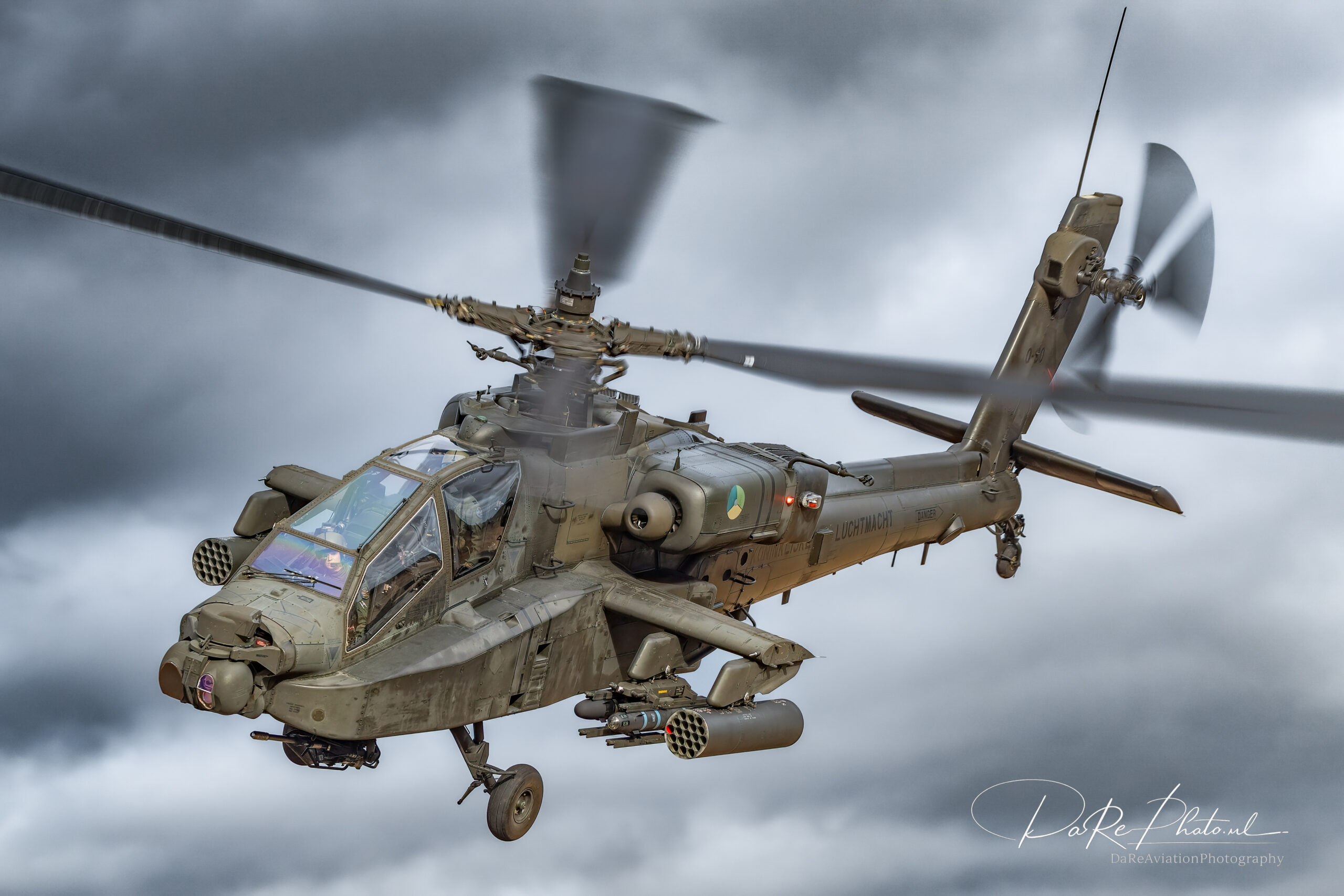
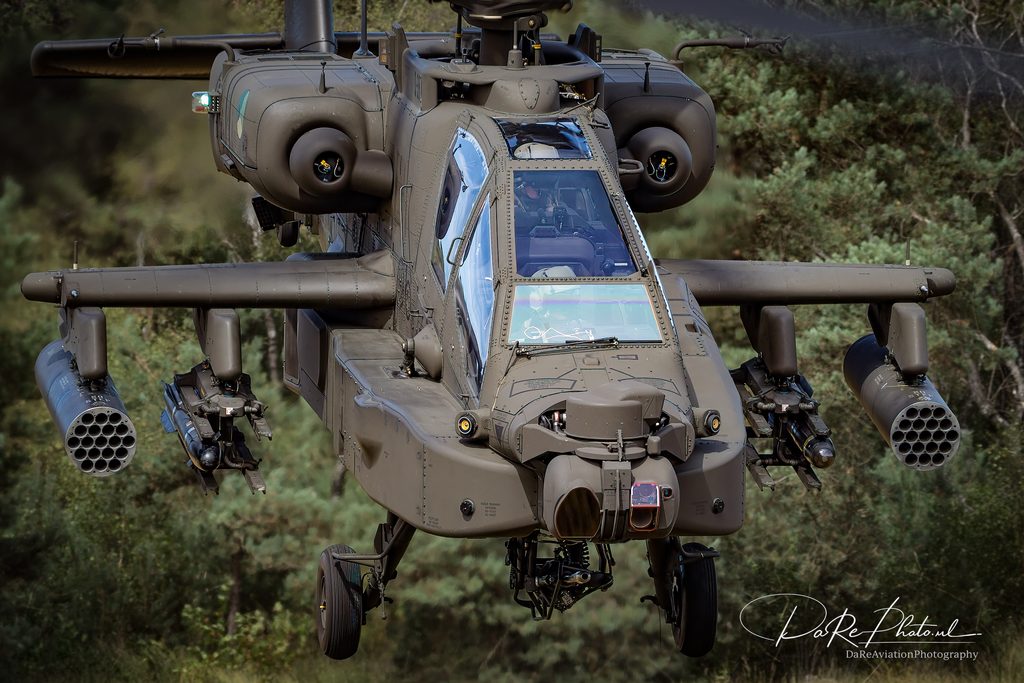
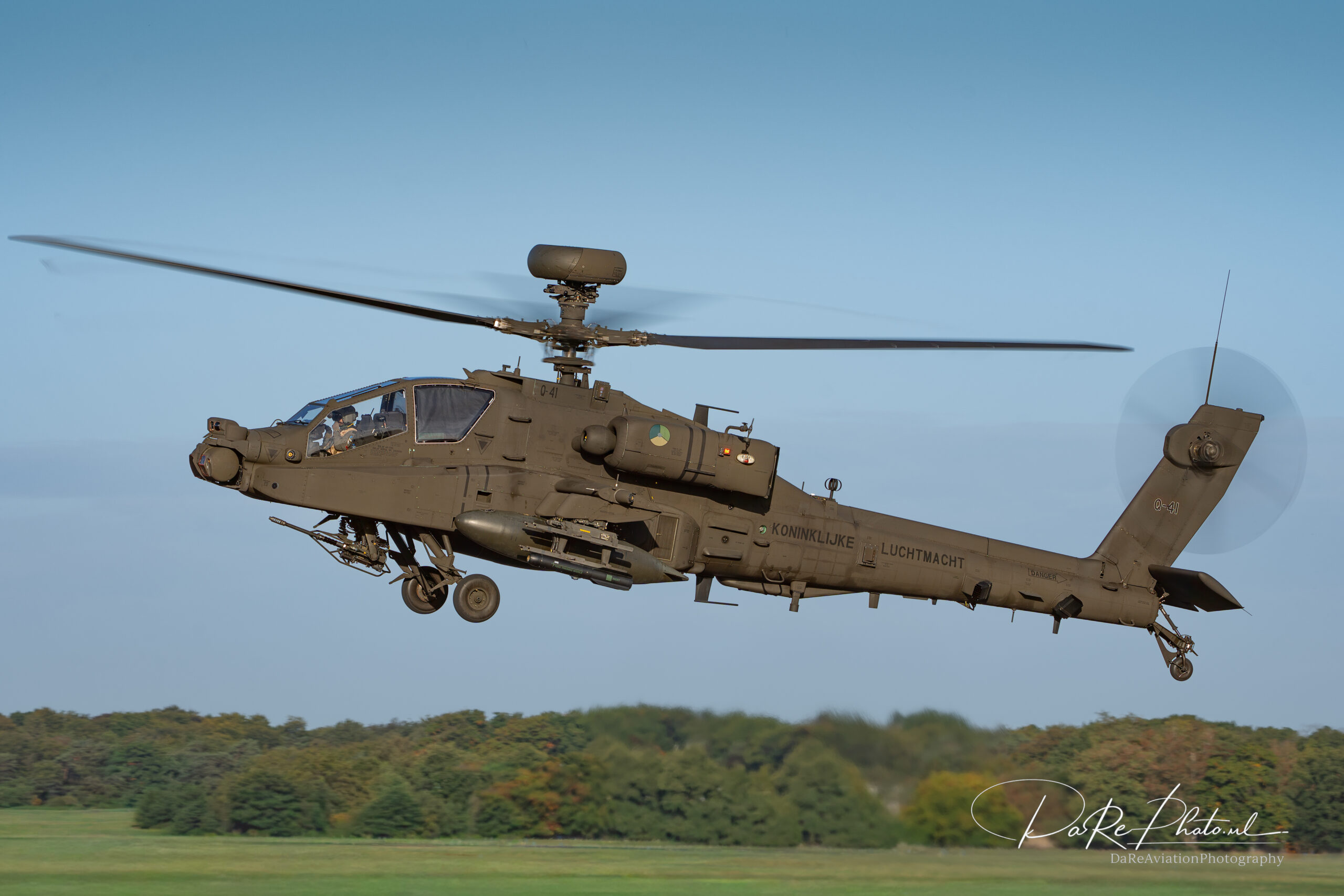
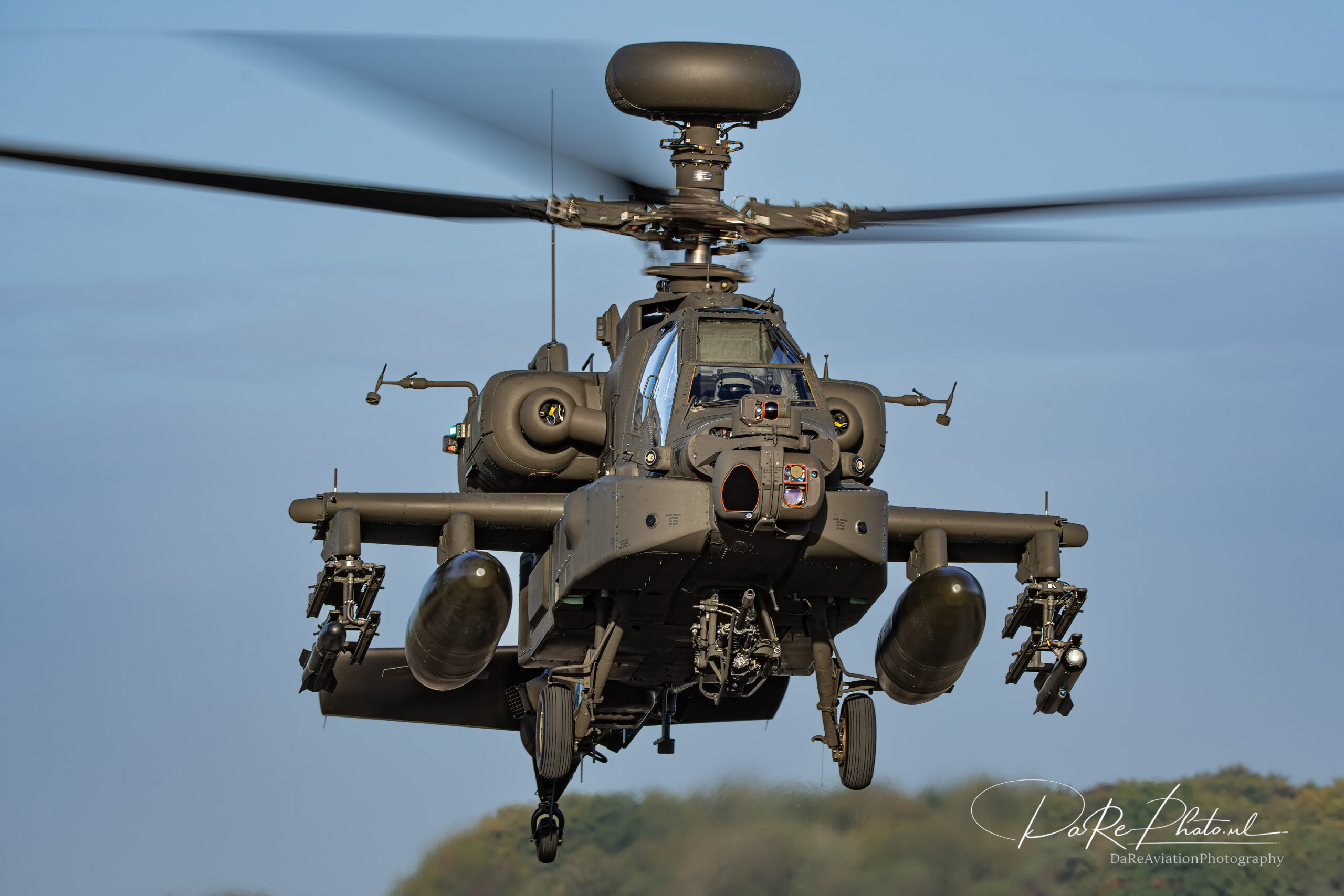
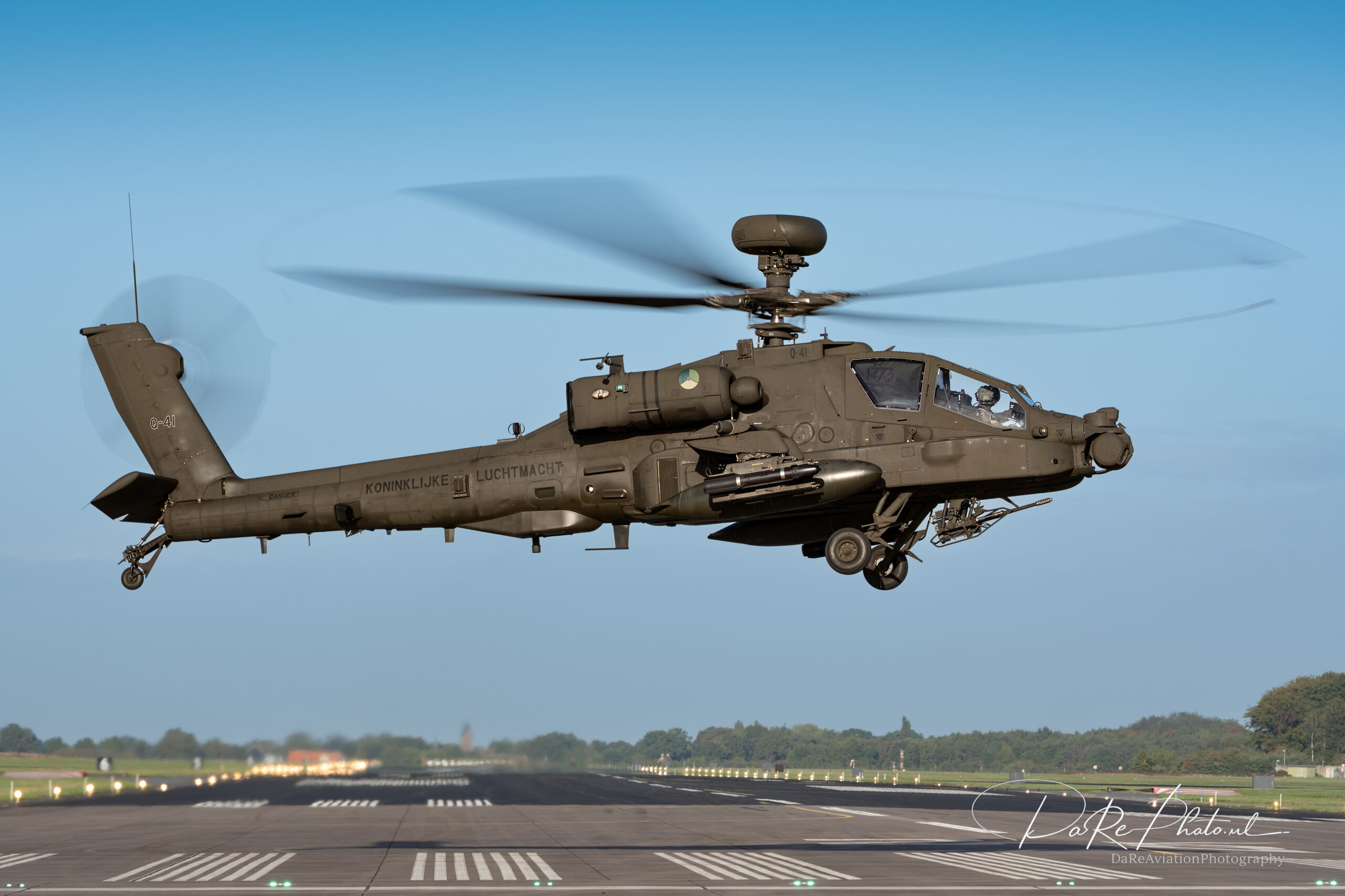
Times have changed, as has the attack helicopter flown by 301 Squadron, the AH-64E Apache Guardian. Danny Reijnen visited the squadron to document how 301 Squadron has adapted to the current threat landscape while also working hard to upgrade to the new version of the Apache.
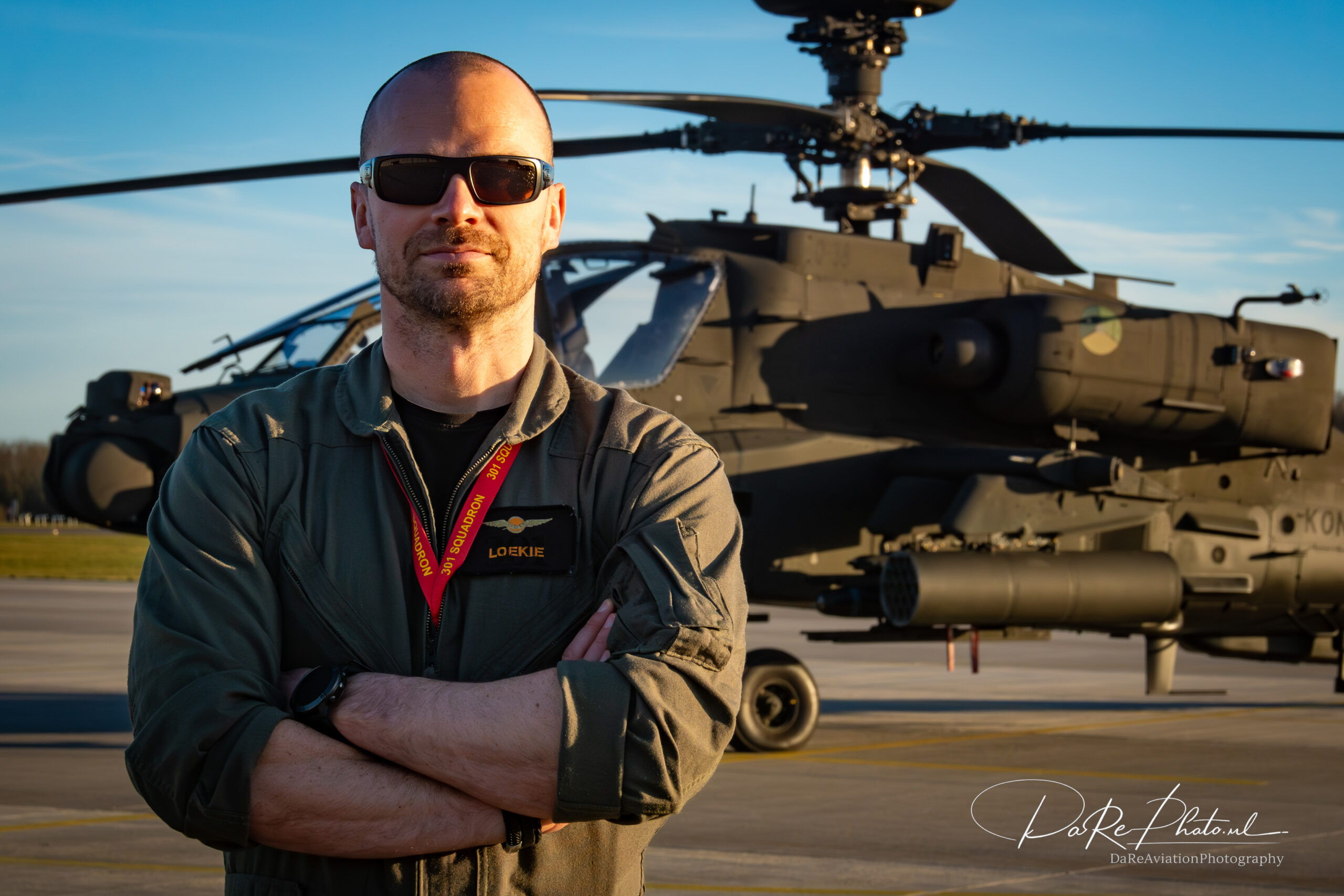
“We have had to adjust our main task due to recent developments in the world. Beside the ones who provide protection when ground troops advance. We are even more the ones who fly into enemy territory to make it as safe as possible for the ground troops,” Major Loekie, deputy squadron commander of 301 Squadron, comments.
“From Lease to Legacy: The Royal Netherlands Airforce and its AH-64D Apache”
In 1993, the Royal Netherlands Air Force (RNLAF) began its selection process for a new attack helicopter. The main contenders included the AH-1W Super Cobra, AH-64D Apache, A-129 Mangusta and Eurocopter Tigre.
In early 1995, it was announced that the AH-64D Apache had been chosen as the winner preferred helicopter. On 24 May 1995, or Dutch Government signed a contract for (thirty) AH-64D Apache attack helicopters. Because of upcoming deployments in Afghanistan in 2004, each Dutch Apache got equipped with self-protection systems mounted on the wingtips. Although the Dutch Apaches were prepared for the Longbow radar system, they were delivered without the distinctive radar dome mounted above the main rotor. Therefore, they are officially designated AH-64D Apache, and not referred to as “Apache Longbow.”
To bridge the gap until delivery of the AH-64D Apaches, the Netherlands signed an agreement with the U.S. government to lease twelve AH-64A Apache helicopters from the U.S. Army.
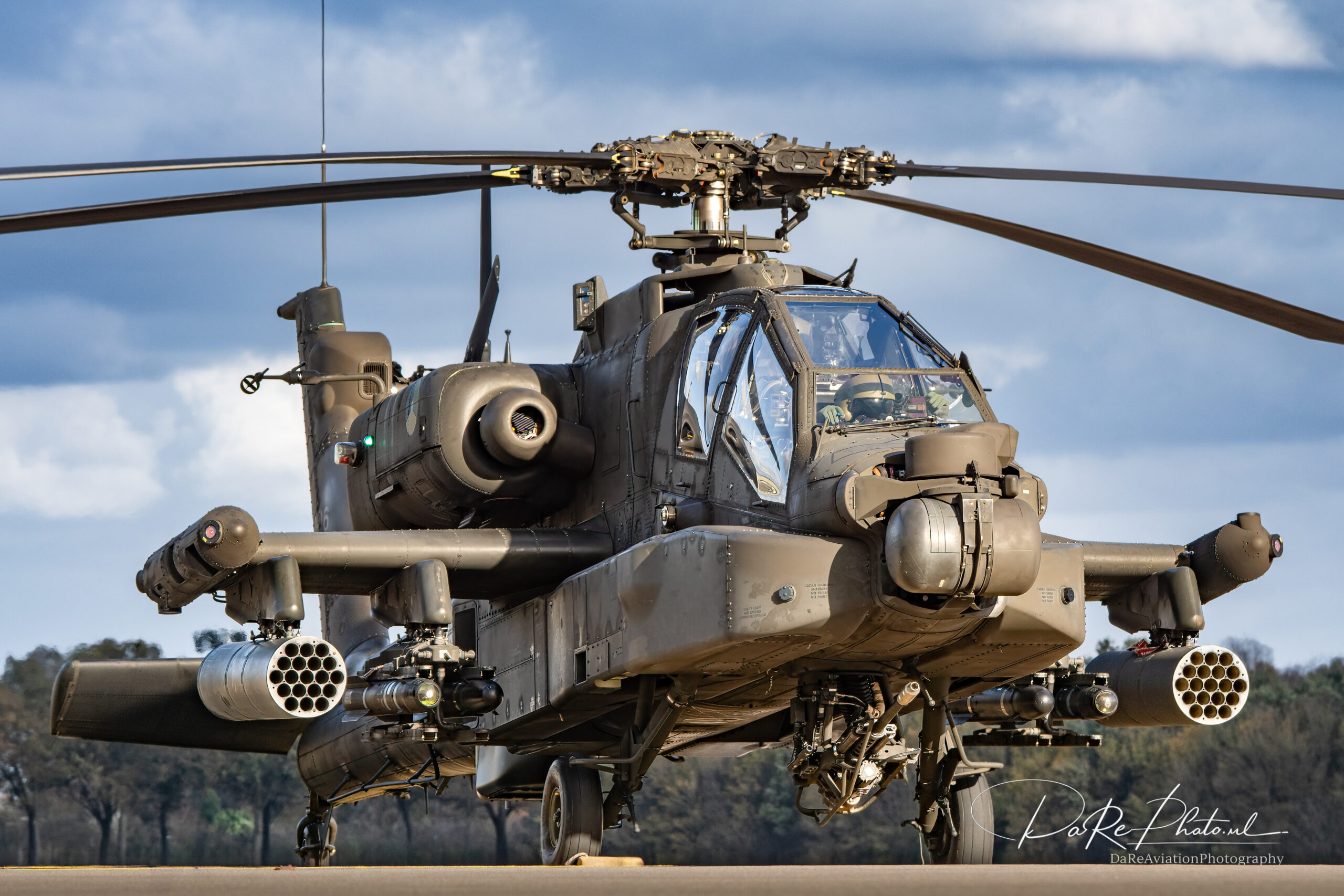
“ Raising the Blade: How Dutch crews mastered the Apache”
When the RNLAF decided to procure the AH-64D Apache, a dedicated training program was required to prepare the Dutch aircrews and technicians as efficiently as possible.
In 1996, the first group of Dutch pilots and maintenance personnel trained at Fort Hood, Texas, under the Combat Aviation Training Brigade (CATB) of the 21st Cavalry Brigade. During this period, the newly formed 301 Squadron underwent an intensive six-month program that progressed from individual crew training to full squadron-level operations, including gunnery and tactical missions.
Twelve McDonnell Douglas AH-64A Apaches for the Royal Netherlands Air Force were delivered to Gilze Rijen AB, from Hanau in Germany, on 13 November. The helicopters were leased from the USA in preparation for the service entry in 1998 of the AH-64D, 30 of which were ordered in May 1995.
The unit continued to build experience through numerous exercises and training events. In 1998, the squadron deployed to Bosnia, subordinated to the U.S. Army’s 1st Infantry Division (Mechanized), specifically under the U.S. Army’s 12th Aviation Brigade marking the first operational deployment of RNLAF Apaches.
“Roll-Out and Training”
The first Dutch AH-64D (Q-01) rolled out at Boeing’s Mesa, Arizona, plant on 15 May 1998. The Netherlands Apache Training Detachment (NATD) at Fort Hood, Texas, was the first unit to receive the Apache. Throughout its existence, NATD operated eight RNLAF AH-64Ds permanently based at Fort Hood for training and exercises. These helicopters never operated outside the U.S.
The first Netherlands-based squadron to operate the AH-64Ds was 302 Squadron. Apaches Q-01 and Q-04 arrived at Gilze-Rijen Air Force Base on 13 July 1999 and by August 2002, the Netherlands-based fleet of twenty-two AH-64Ds was completed. Each of 301 and 302 Squadrons operated eleven aircraft. The leased AH-64As were returned to the U.S. Army in two batches in September 2000 and February 2001, accumulating nearly 6,000 flying hours during their time with the RNLAF.
“The history of 301 Squadron”
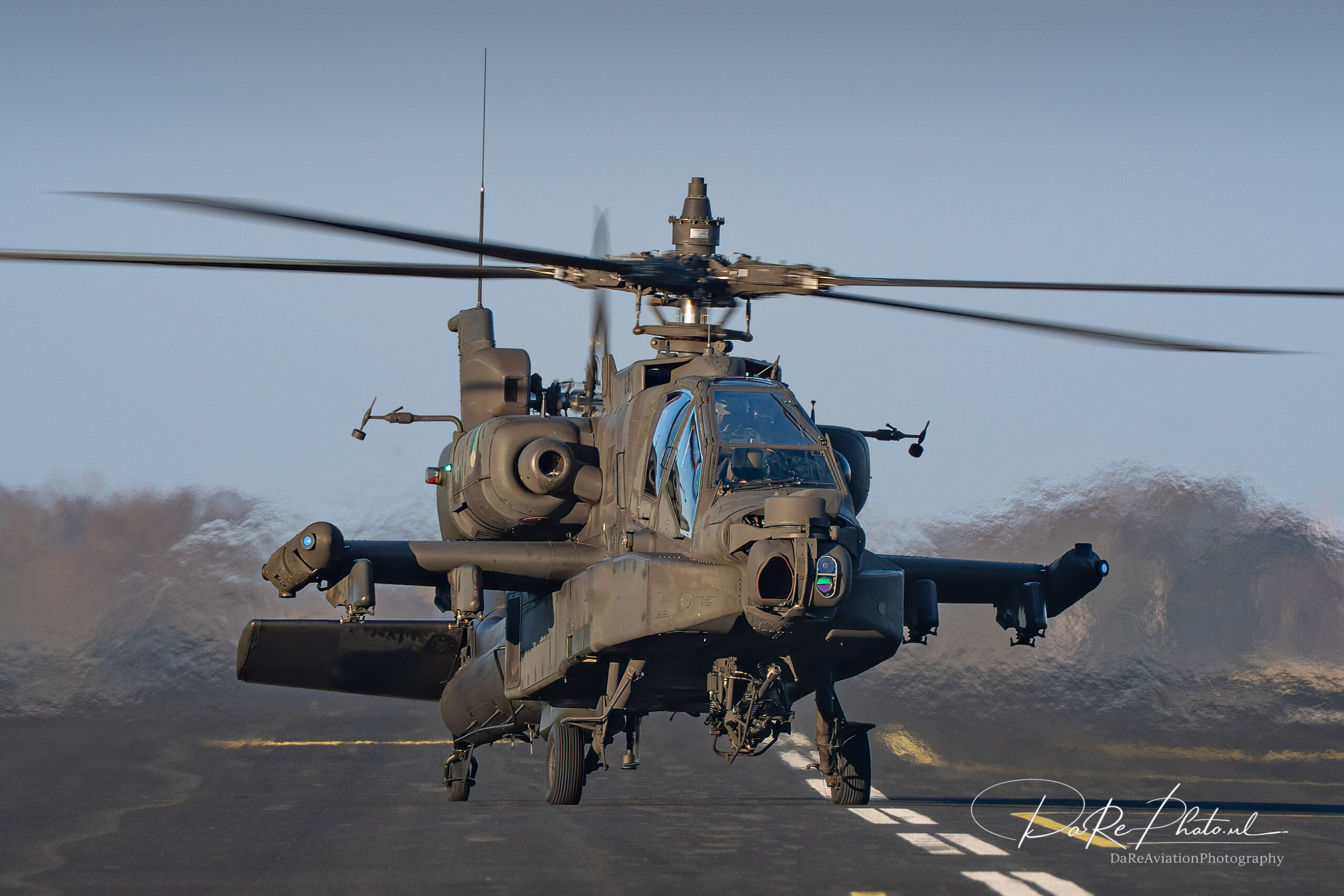
301 Squadron was originally established in 1962 at Ypenburg Air Base as one of three reserve helicopter squadrons, 300, 301, and 302 of the RNLAF. Of the three, only 300 Squadron was fully activated, initially operating in a training role with the Hiller H-23 Raven, before transitioning to the Sud-Aviation/Aérospatiale Alouette III in August 1965.
Although aircraft were nominally assigned to 301 Squadron on paper, the unit remained a reserve formation intended for activation only during times of crisis. Consequently, 301 Squadron never became operational nor took part in any missions during this early period.
In 1993, the squadron was officially reactivated as the first Dutch unit to be equipped with the AH-64 Apache. Upon its reformation, 301 Squadron inherited the traditions of 314 Squadron, a former fighter unit previously based at Eindhoven and Gilze-Rijen Air Base. The squadron’s nickname, “Redskin,” originates from Humphrey the Indian, the mascot of 314 Squadron.
The official handover of the leased AH-64A Apache helicopters took place on 27 January 1997. Just four days later, on 31 January 1997, 301 Squadron was formally re-established, and on 4 February, the RNLAF began its first Apache flight operations. The AH-64A was officially introduced into service on 06 June 1997.
In the autumn of 2000, the RNLAF began phasing out the leased AH-64A Apaches as the initial new AH-64D helicopters were delivered. On 29 August 2000, the Q-29 became the final aircraft delivered to 301 Squadron, bringing the total to eleven AH-64D Apaches in operational service.
“Budget Cuts and Squadron Restructuring”
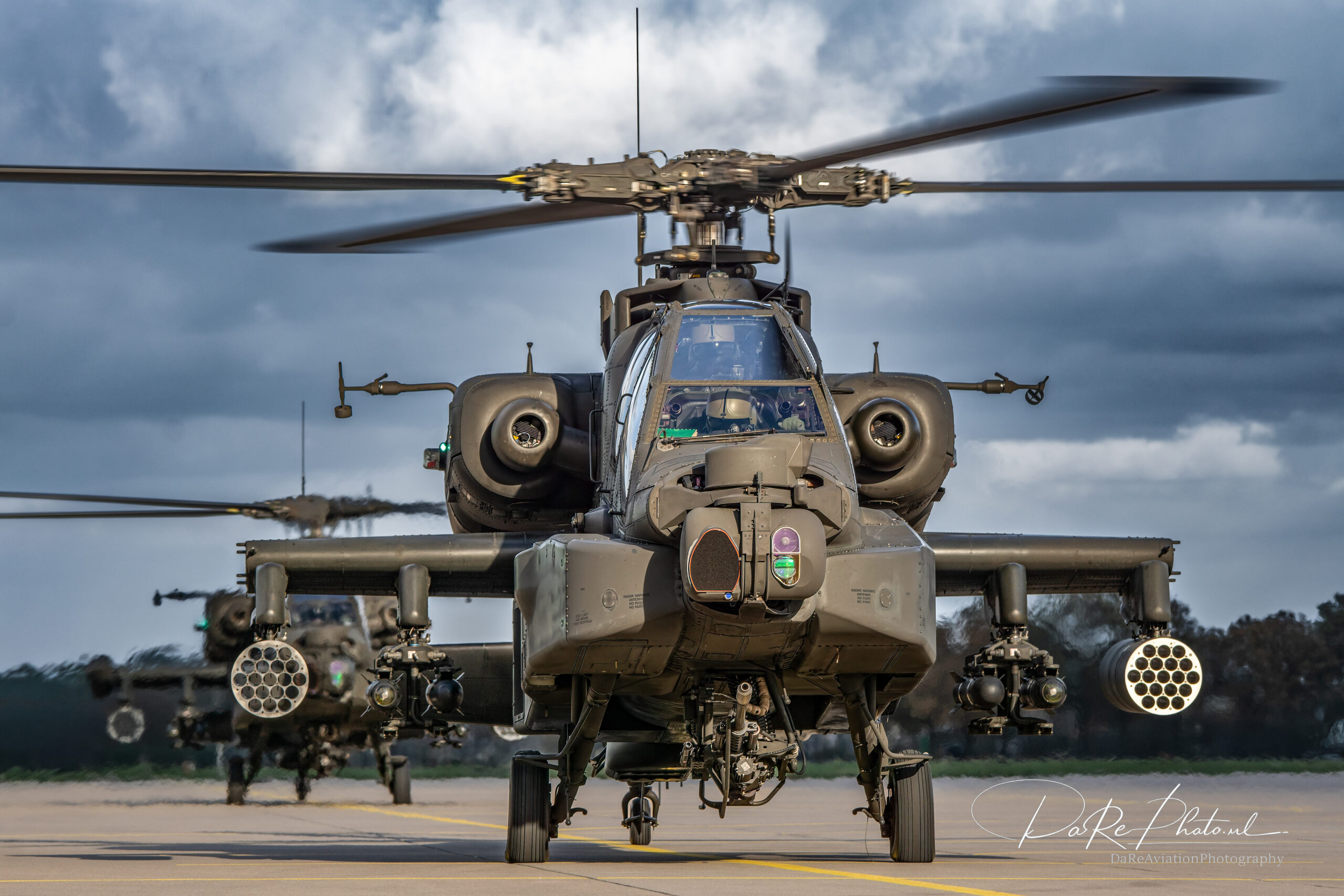
Due to budget cuts, 302 Squadron was decommissioned on 1 April 2004. Following its integration into 301 Squadron, the Netherlands-based Apache fleet increased to sixteen AH-64Ds, while five others were initially stored for potential sale. This plan was later abandoned and the helicopters re-entered service with 301 Squadron.
302 Squadron was reactivated on 25 November 2013, when the Joint Netherlands Training Detachment (JNTD) at Fort Hood took over its name and traditions. JNTD had previously succeeded NATD about a year and a half earlier, after three (later four) CH-47F(NL) Chinooks were added to the fleet, expanding its joint air force and army training responsibilities. During this period, the Dutch unit relocated from Hood AAF to Robert Gray AAF.
“The Risks of the Mission: 301 Squadron’s Apaches Abroad”
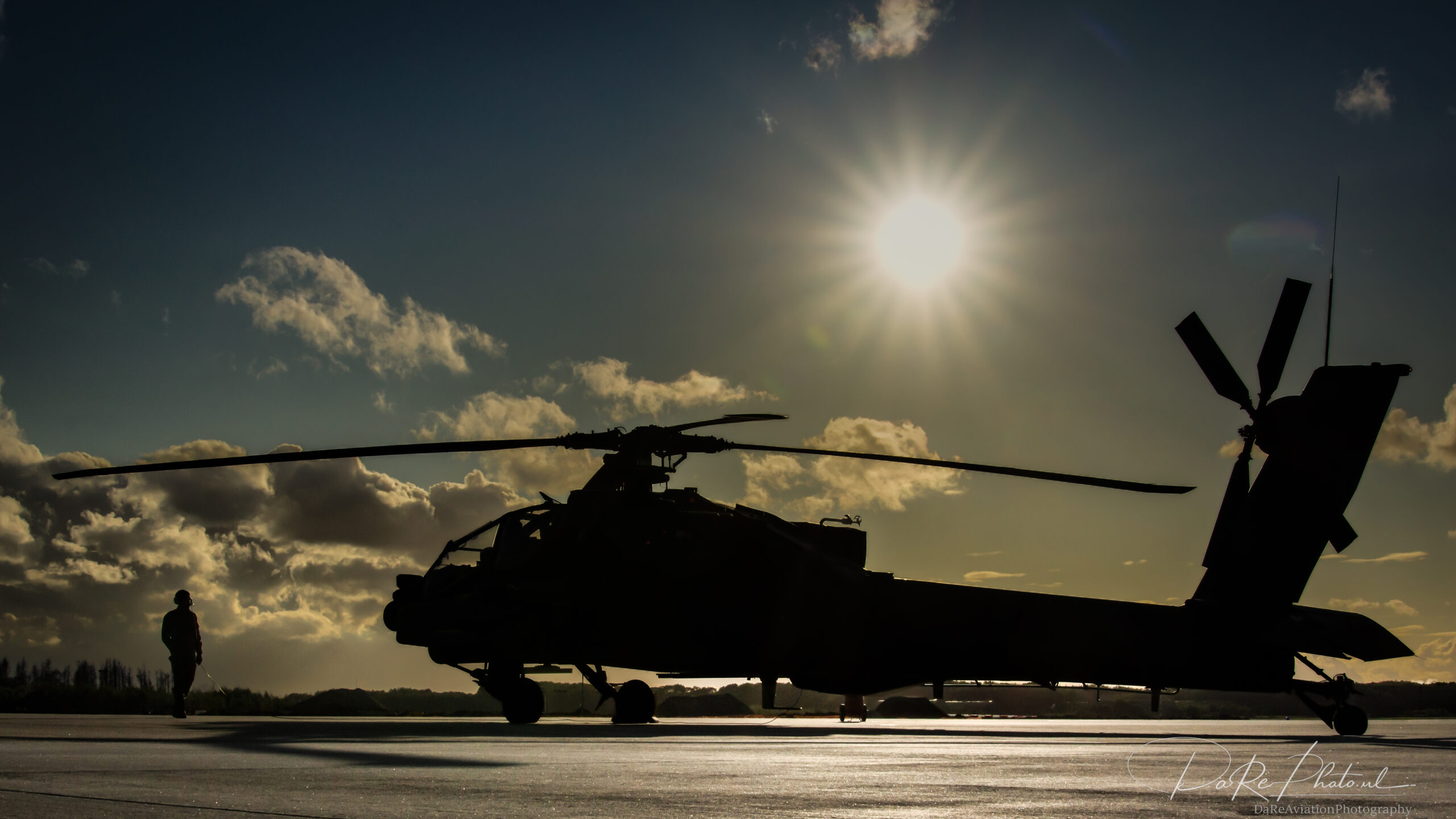
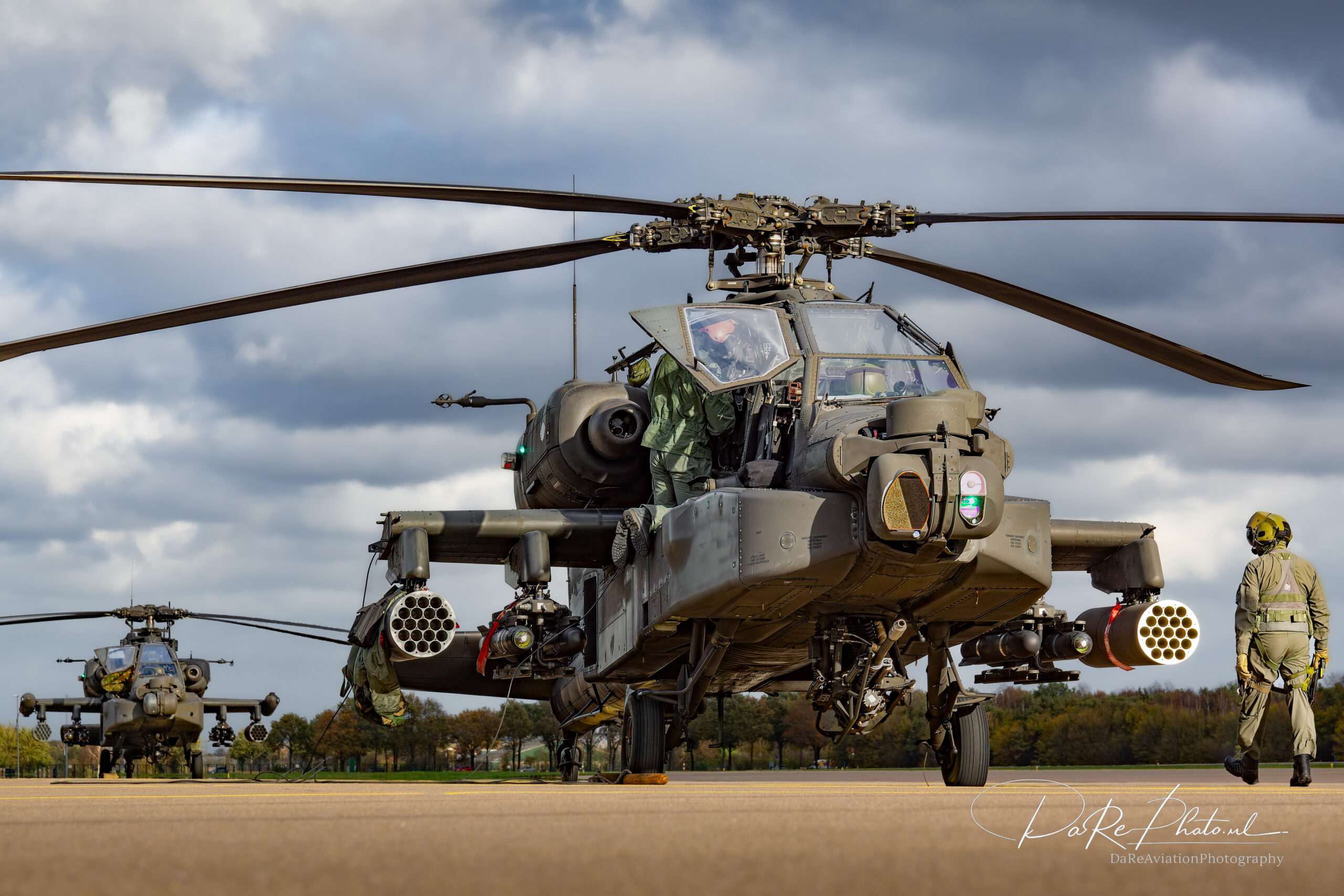
301 Squadron, renowned for its skilled crews and advanced AH-64D Apaches, has experienced the harsh realities of military aviation during overseas operations.
In August 2004 in Afghanistan, an AH-64D was lost during a mission. Although the exact circumstances were not fully disclosed, the crash underscored the dangers of operating attack helicopters in complex combat environments.
On 17 March 2015 in Mali, an AH-64D was lost approximately 47 kilometers north of the Dutch base in Gao during a weapons-firing exercise. Unfortunately the crew did not survive.
These incidents highlight the challenges and risks faced by 301 Squadron as it operates in demanding environments worldwide. Despite advanced technology and rigorous training, each mission carries inherent danger, a reality that the squadron’s personnel confront daily.
“ Netherlands Remanufactures AH-64D Apaches to AH-64E Standard ”
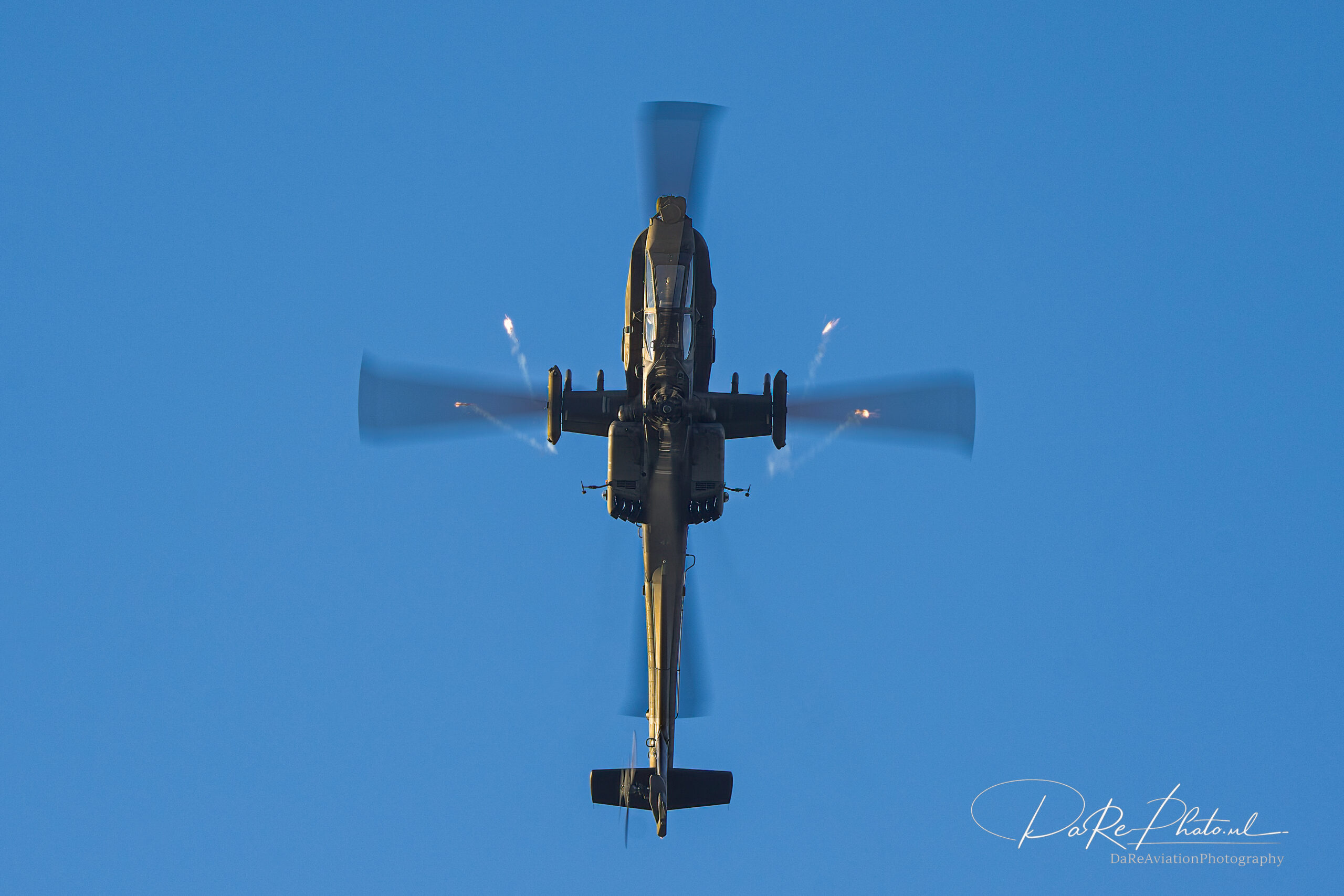
By the late 2010s, the RNLAF’s AH-64D fleet began to show its limitations in the face of a rapidly evolving digital battlefield. While the airframes remained structurally sound and well-maintained, their avionics, communication systems, and networking capabilities were based on technology from the 1990s. The D-model lacked the connectivity, processing power, and integration required for modern network-centric warfare, where real-time data sharing and manned-unmanned teaming are essential.
In 2017, the Dutch Ministry of Defence (MoD) initiated plans to remanufacture its twenty-eight remaining AH-64D Apaches, out of the thirty originally delivered between 1998 and 2002, to the AH-64E Apache Guardian standard. Following approval by the U.S. State Department and the Dutch Parliament, an official agreement with the U.S. Government was signed at Gilze-Rijen Air Base on 14 September 2018.
According to Lt. Col. John de Groot, program manager for Apache-related projects within COMMIT since December 2018, the decision was driven by long-term operational and cost considerations
“Although the AH-64Ds were not yet at the end of their (technical or operational?) service life, the Ministry decided to upgrade the fleet to the Echo standard to keep the helicopters operationally relevant and future-proof,” he explained.
The remanufacturing approach was chosen over purchasing new helicopters because the acquired AH-64D airframes in operational service were still in an excellent condition, allowing Boeing to reuse key components of the D-models. This provided near-new aircraft capability at substantially lower cost, while maintaining operational continuity.
The upgrade also ensures commonality between other AH-64E users, enabling continued use of existing spare parts, tools, and training infrastructure. By joining the U.S. Army’s Apache Remanufacture Program, the Netherlands benefits from established supply chains, technical expertise, and economies of scale.
“Remanufacturing was the most cost-effective and future-proof option,” said de Groot. “Our Deltas were in excellent condition, and by upgrading through the U.S. program, we gain all the new capabilities of the Echo while maintaining our proven support structure. The Apache has demonstrated its value in numerous operations, and although the Echo introduces many new capabilities, it still shares a high degree of commonality with the Delta. This allows us to continue using existing parts, tools, and weapons systems—without the need for major infrastructure changes at squadron level.
“ Transitioning and upgrading from Delta to Echo “
Major Loekie emphasizes;
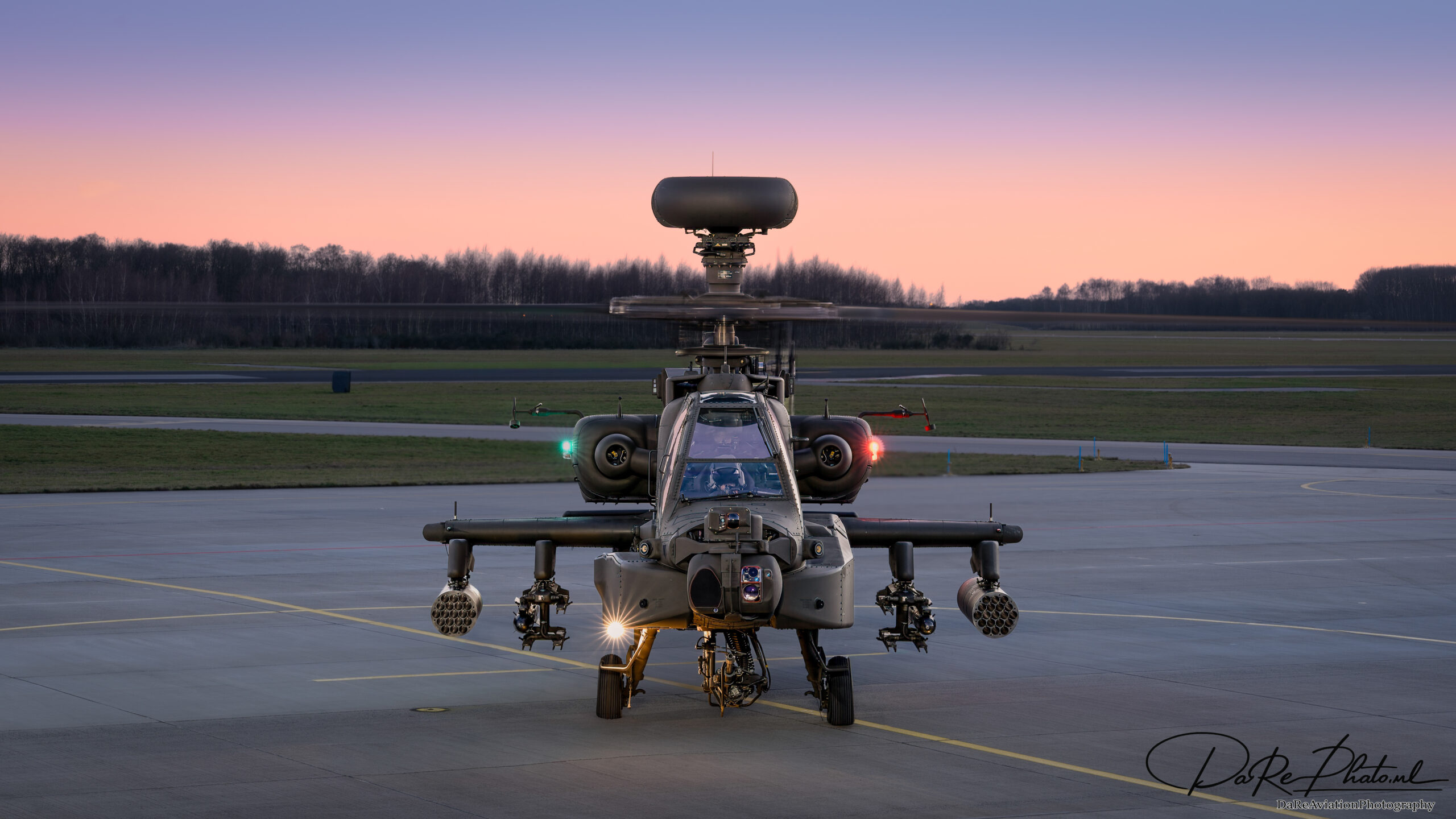
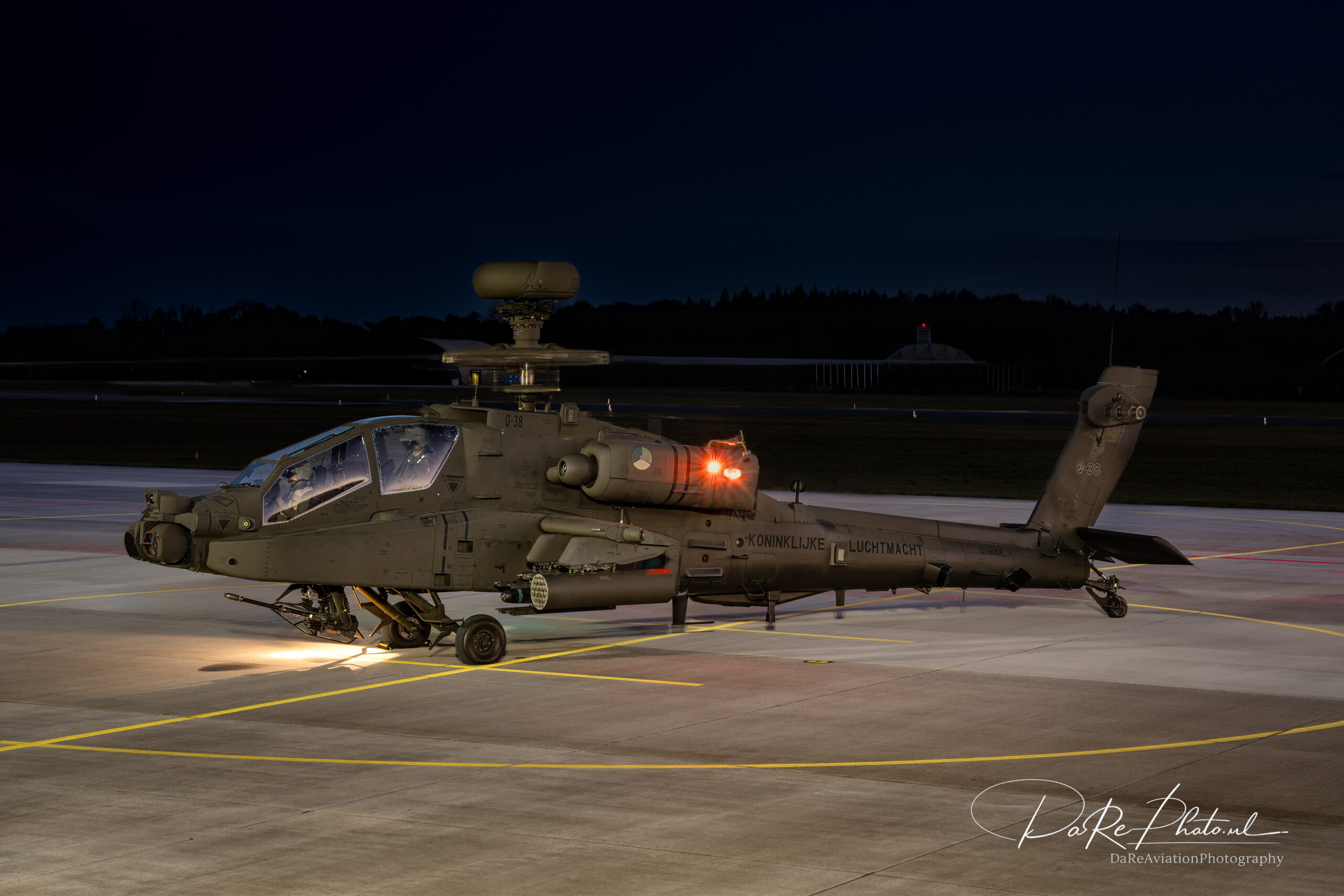
“ In a turbulent year our squadron was ordered to retire the trusted AH‑64D “Delta” and, with no overlap, bring the brand‑new AH‑64E “Echo” into service. The switch forced pilots, technicians, planners and support staff to relearn everything from the ground up. ´
Although the Delta had served for decades, a change was needed since its upgrade path was exhausted. The Echo can employ the latest sensors, tactical data links and weapons, keeping us relevant for years to come.
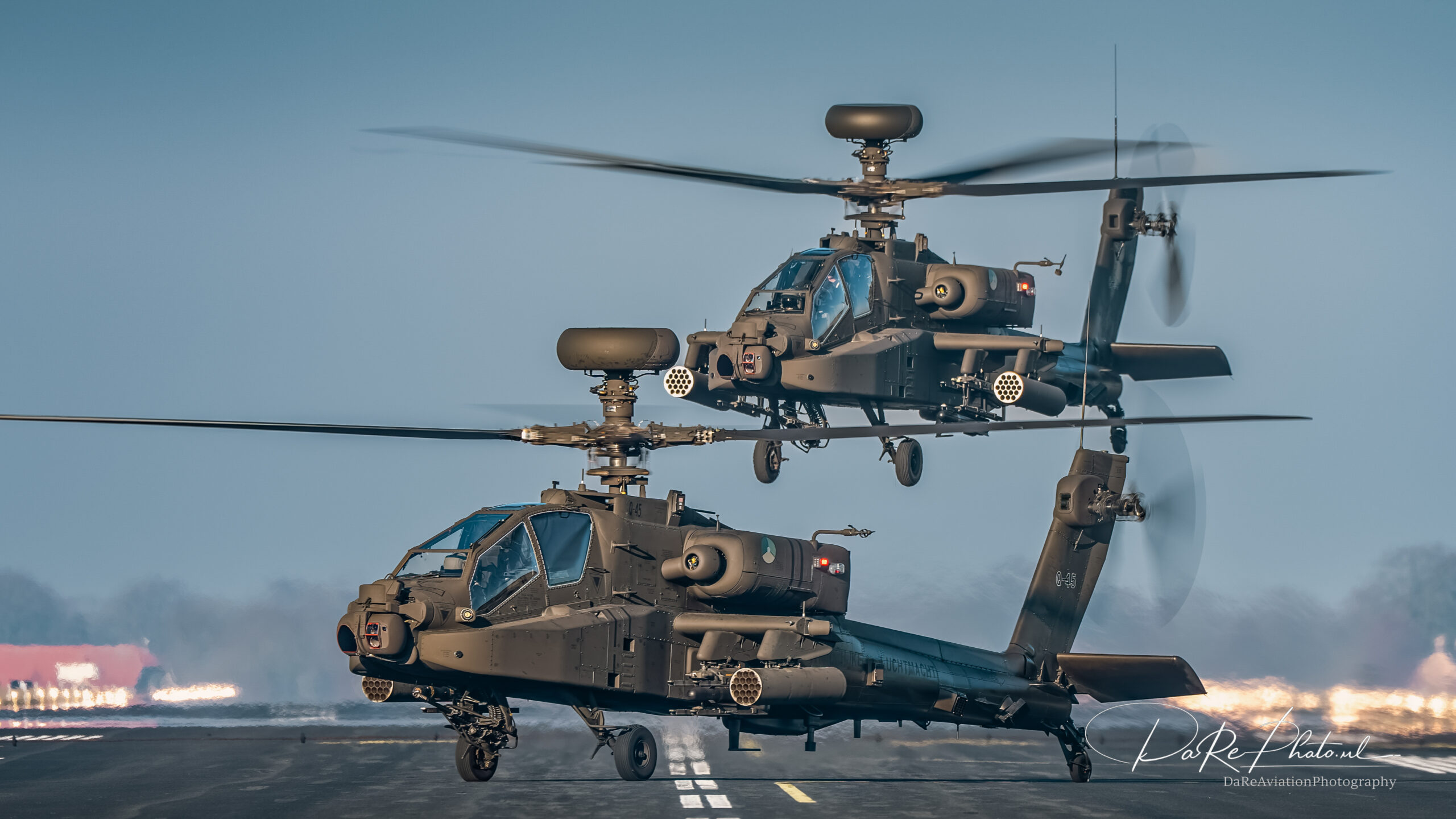
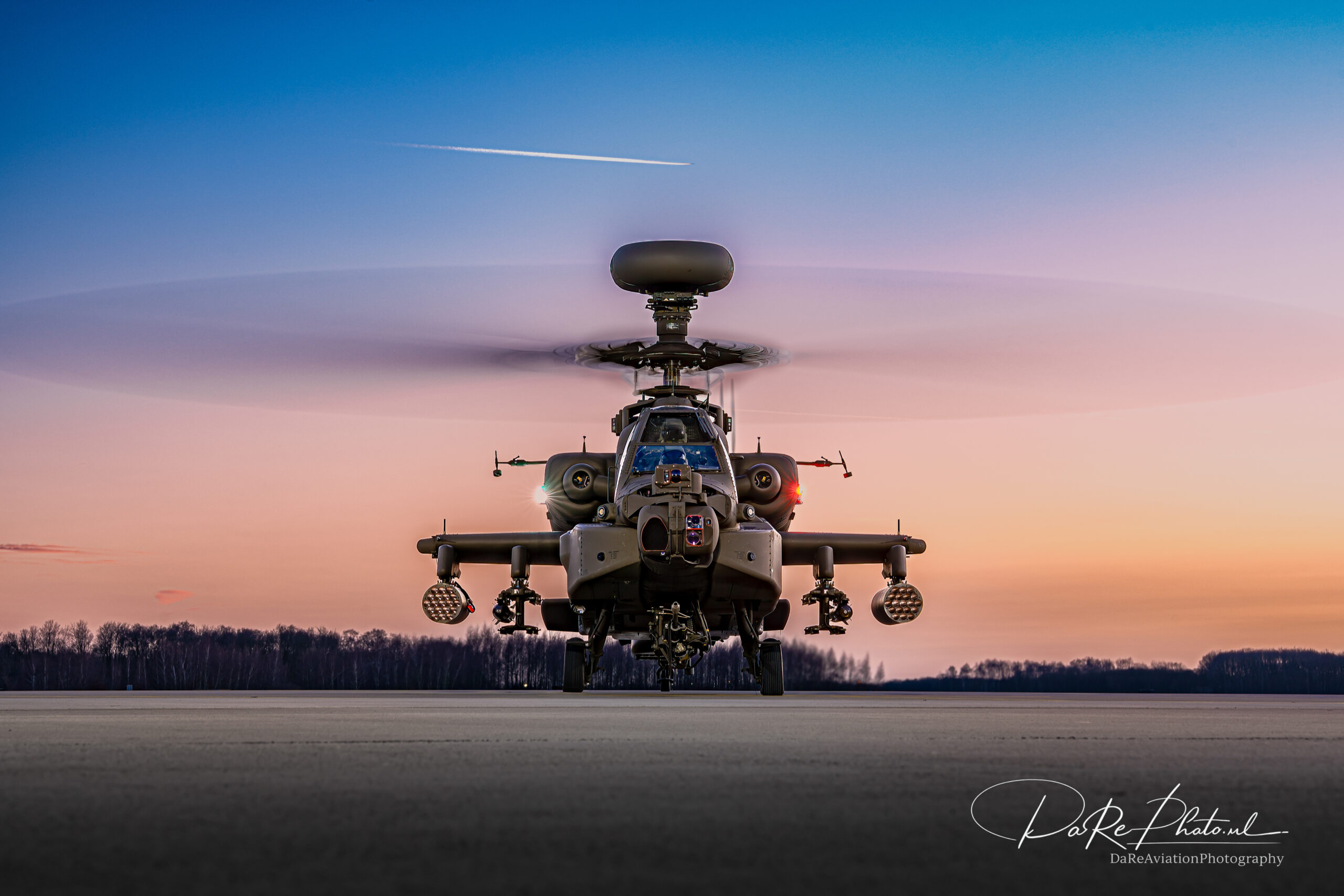
With stronger engines, a tougher transmission and longer rotor blades the Echo provides the crews with more power, enhanced flight envelope and increased speed. All this makes the Echo , far more fun to fly.
The squadron’s transition to the AH‑64E “Echo” was shaped by a tightly scheduled, a four‑phase program executed in 16 weeks, that turned raw pilots into a cohesive, data‑savvy battle teams.
IFR fundamentals (2 weeks) – Pilots spent two intensive weeks in civilian trainers, mastering instrument flight, precision approaches and the basic knowledge of an IFR environment
Classroom (2 weeks) – Theory replaced the cockpit. Engineers and instructors walked crews through the Echo’s new engines, long‑blade rotor system, upgraded EO/IR cameras, fire‑control radar and L‑16 radio suite.
Simulator (4 weeks) – In the full‑motion simulator crews confronted emergencies—engine surges, hydraulic loss, display failures and rehearsed low‑level ingress, radar‑aided targeting, and laser designation with picture‑in‑picture display.
Flying (8 weeks) – The final, longest phase brought crews back to the real Apache. Early sorties were simple navigation; later flights integrated the upgraded cameras, fire‑control radar, and L‑16 radios in realistic strike missions.
“The biggest challenges we have dealt with during the transition ?” Loekie continues;
“ The Echo’s cockpit spits out massive sensor, weapons and data link streams. We had to create workflows that turn raw data into actionable insight without drowning the crew.
During the transition from the Delta to the Echo, the 301 Squadron remained operational although they had fewer helicopters available. Pilots kept their skills sharp on civilian trainers, leaned heavily on simulators, and contributed to studies and future‑use projects. Technical staff assisted other bases with quality checks and logistics while waiting for the first Echo deliveries.
Months after the first Echo sortie, the squadron feels reborn. The platform is more powerful, more aware, and far more adaptable, turning the transition from Delta to Echo into a catalyst for innovation. We now fly an Apache that truly feels like a steroid‑powered beast, ready to dominate any mission that comes our way.”
“ Delivering fifth generation firepower to the current battlefield “
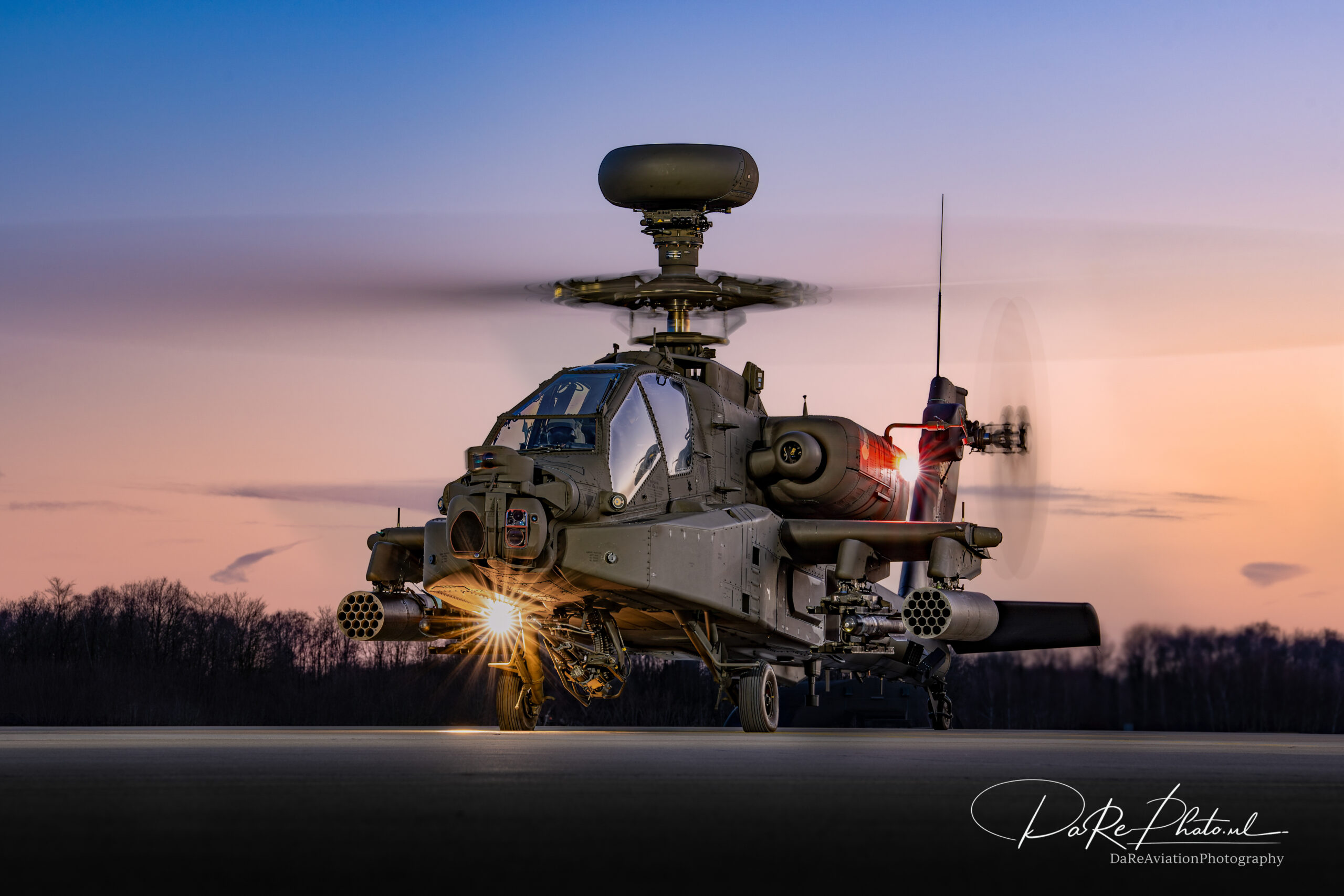
The first significant exercise of the Dutch AH-64E occurred during Tac Blaze in the United Kingdom in 2024. The event served as the initial opportunity for 301 Squadron to demonstrate the new Apache’s capabilities in an high threat setting. the Dutch helicopters performed deep strikes while operating in, electronic warfare environment, all low level and mostly flown at night. This exercise marked the AH-64E’s operational debut abroad and established the platform’s readiness for future expeditionary use.
Loekie emphasizes ;
“ Next to this exercise we meet our fellow Apache users on a regular base. with the aim of improving together in the tasks we perform. We observe each other’s methods and hold an annual Attack Aviation Summit to discuss these topics. The intention is that, in the future, we will train together more frequently so we can learn even more from one another and collaborate more effectively”
Early 2025, the squadron participated in exercise Centaur Wrath, a national training exercise focused on precision engagement and combined-arms coordination. Several AH-64E helicopters flew a series of attack profiles, overwatch tasks, and integration flights with ground elements. The training emphasized the aircraft’s improved situational awareness and digital networking capabilities, essential for modern joint operations.
Between 12 and 23 May 2025, the 301 Squadron’s AH-64Es took part in exercise ‘Falcon Spring 2025’, in the Netherlands. This large-scale Air Maneuver readiness exercise featured the coordinated employment of attack, transport, and combat service support elements under the “three-squadron concept. The AH-64E conducted attacks out of contact and attacks in contact. In addition collaborating tasks were trained where the AH-64E conducted armed overwatch and escort tasks. Operations included forward arming and refueling point (FARP) drills, night operations, and dynamic low-altitude missions. With multiple AH-64E’s joining the exercise, it was the first major domestic deployment of the Echo-variant in an integrated joint environment.
Later in 2025, the squadron deployed to Poland for exercise Falcon Autumn 2025. Operating from Zegrze Pomorskie Air Base and the Drawsko Pomorskie training area, the exercise tested the Dutch Air Maneuver Task Forces ability to project combat power abroad within a NATO framework. The detachment included AH-64E Apaches from 301 Squadron, which executed attack operations. The deployment also served as an operational test of the new platform’s logistics and communications architecture in a forward-deployed environment.
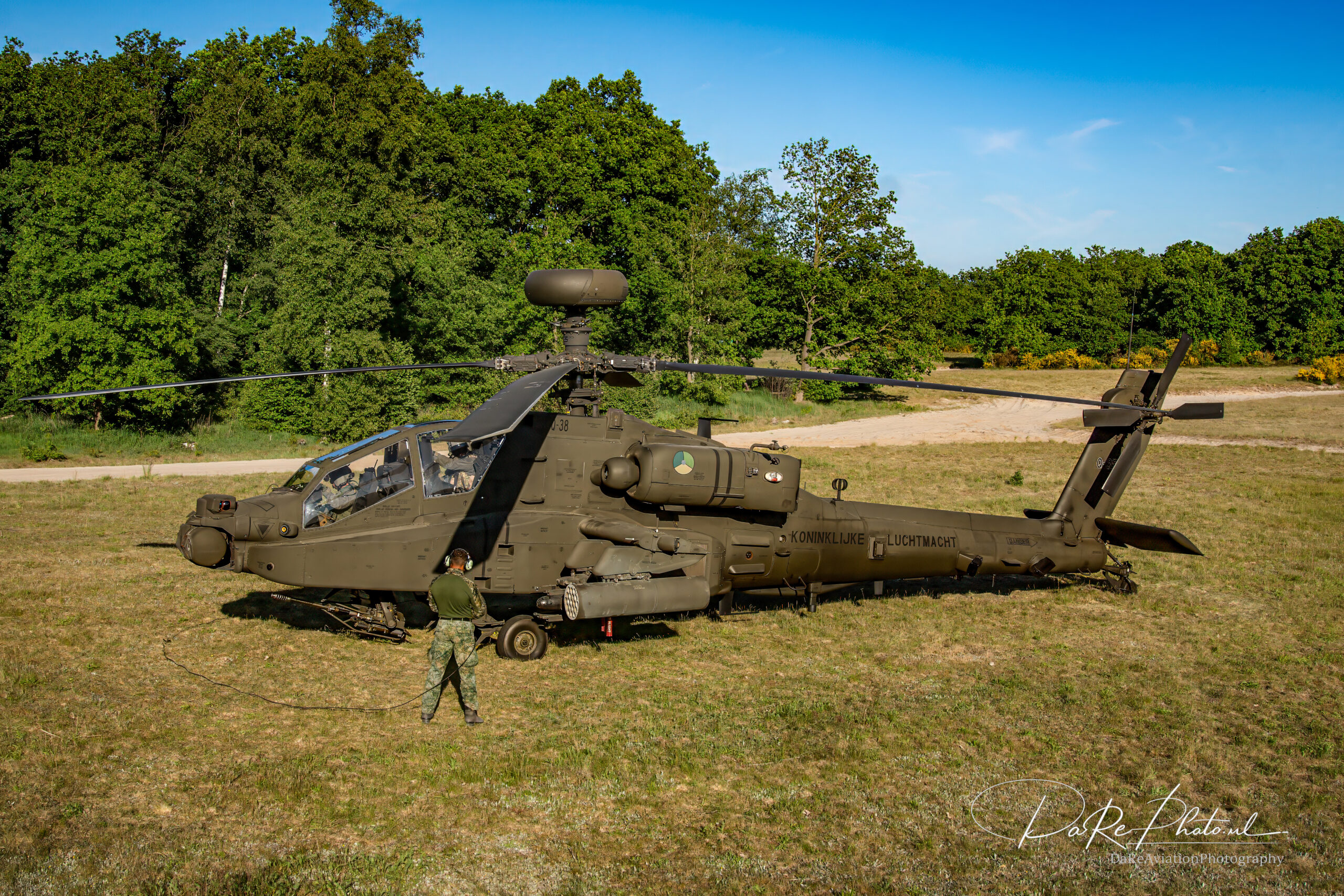
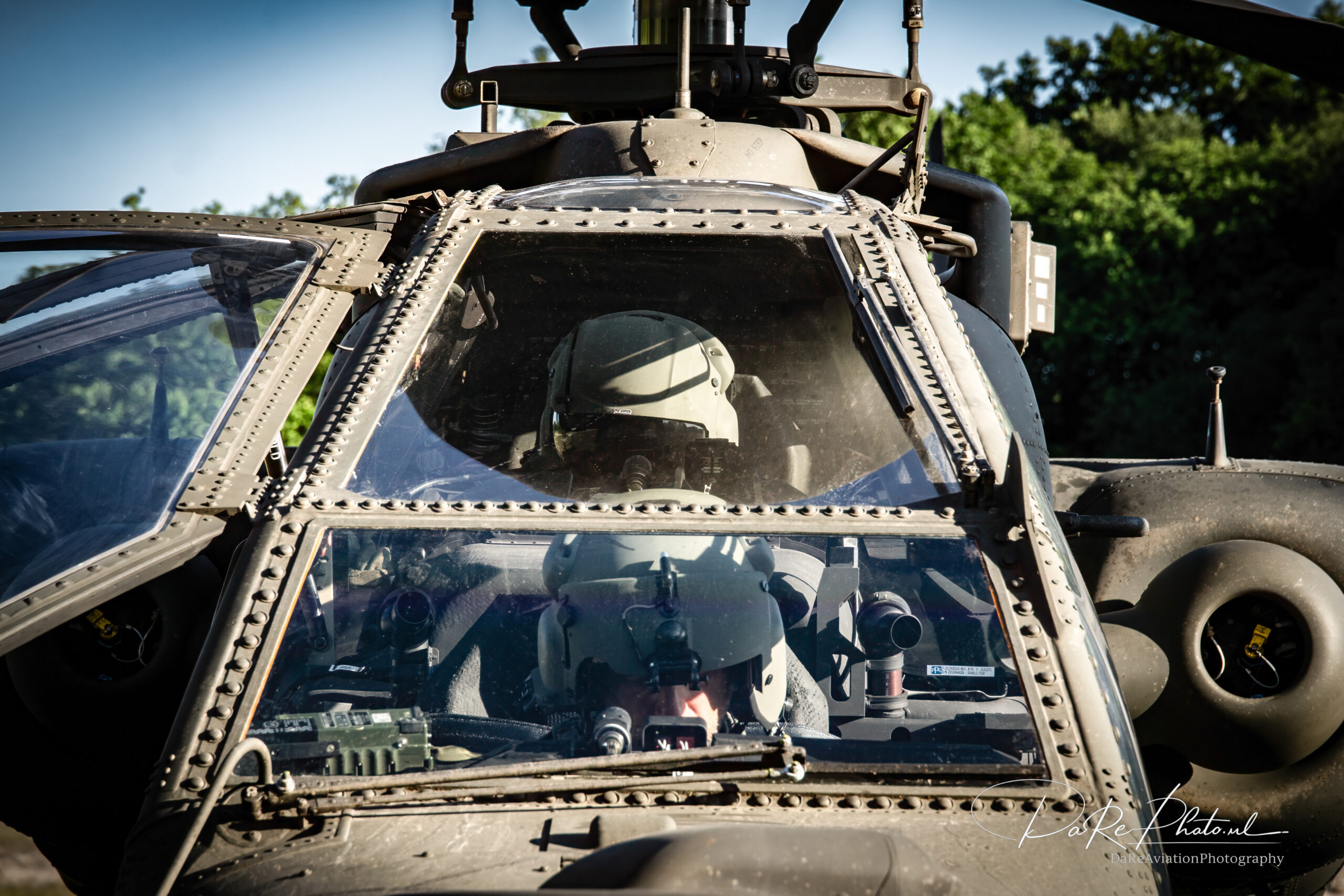
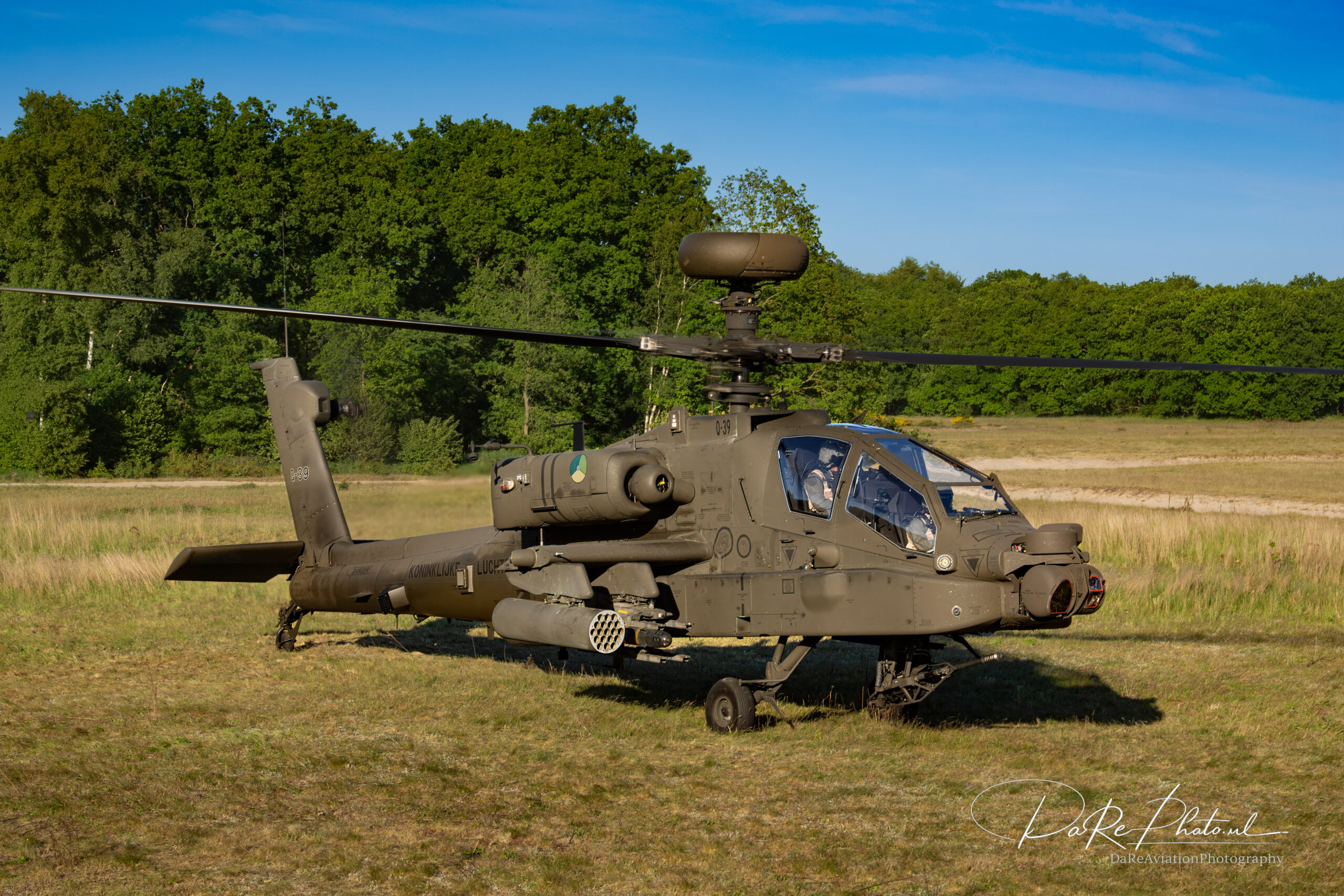
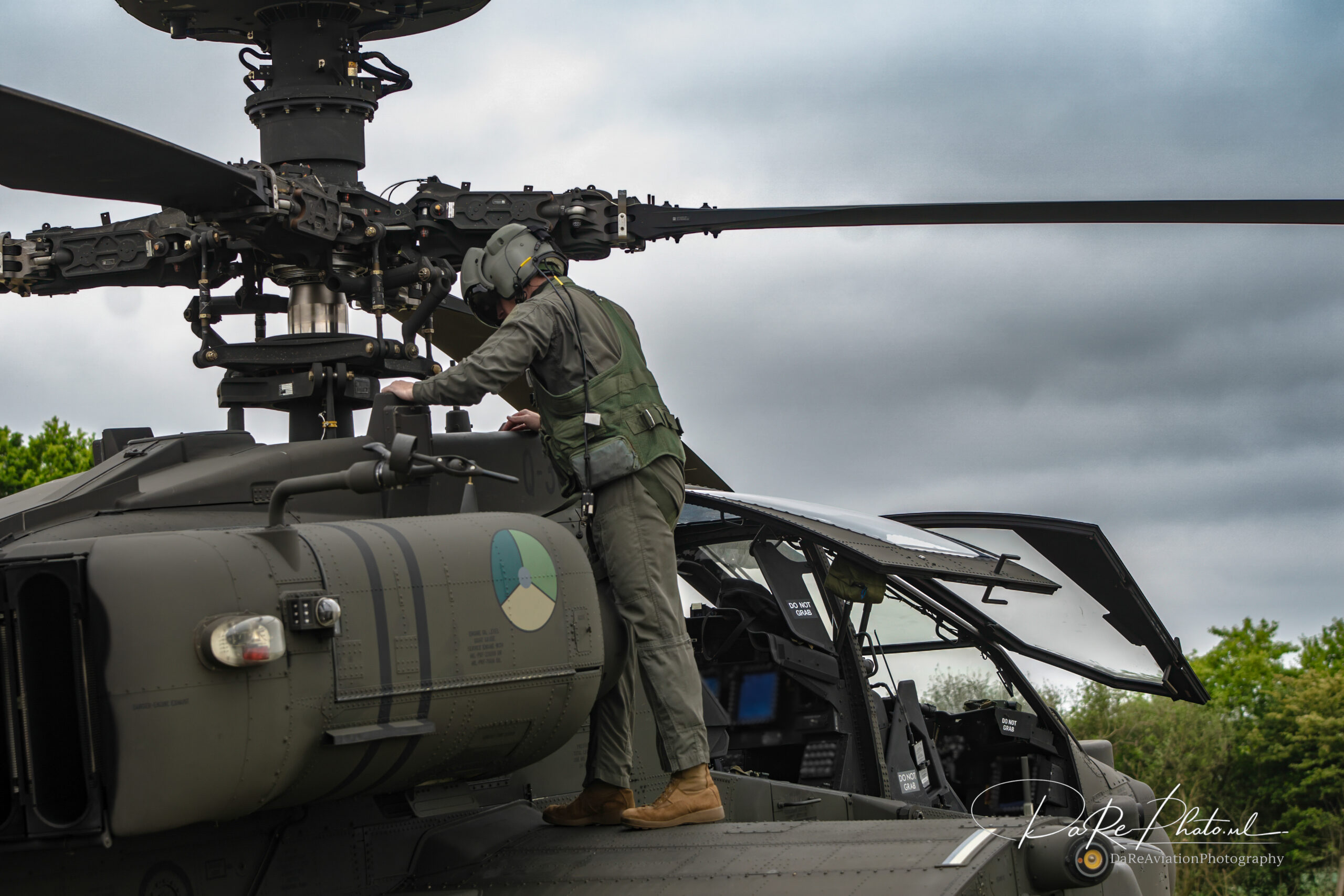
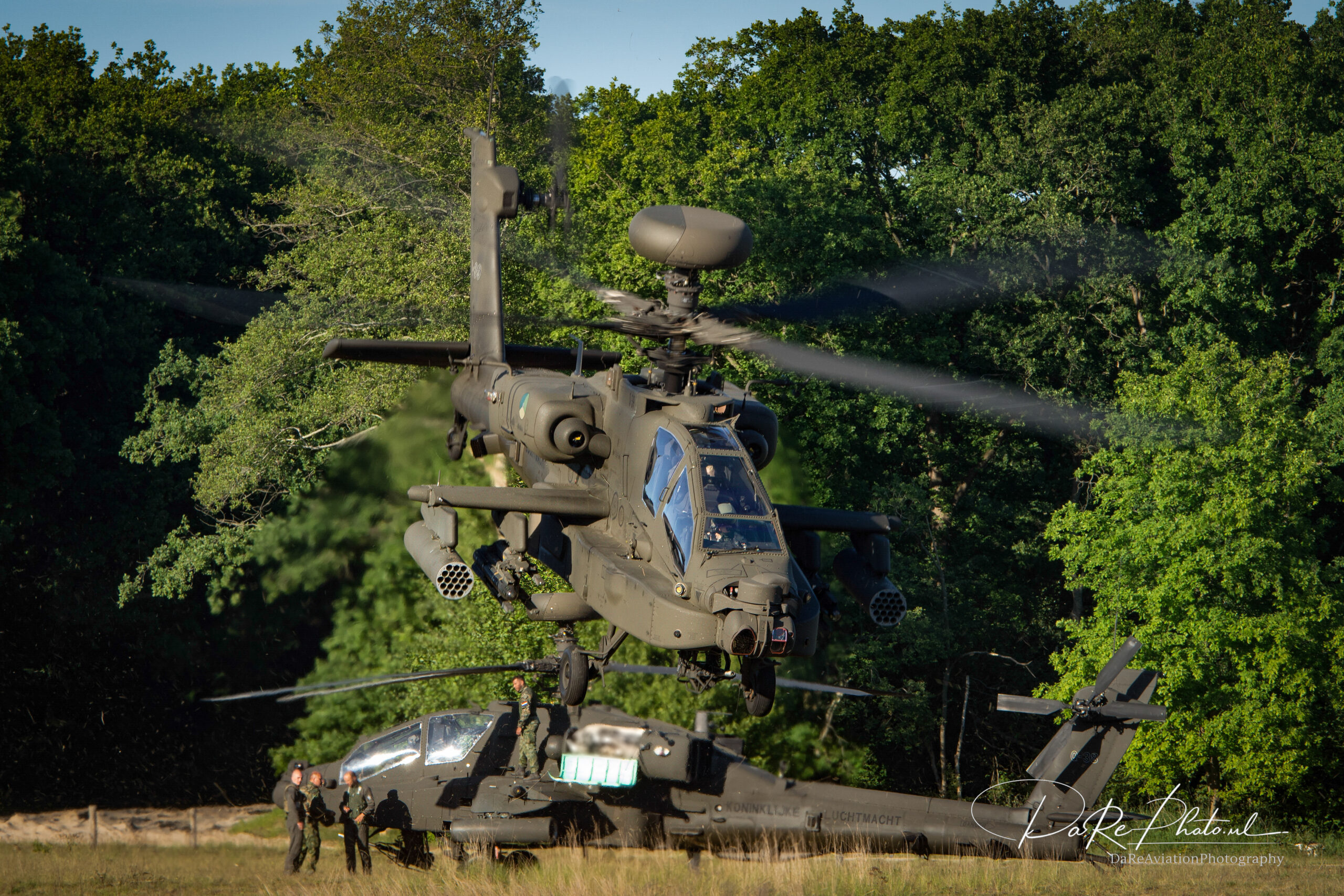
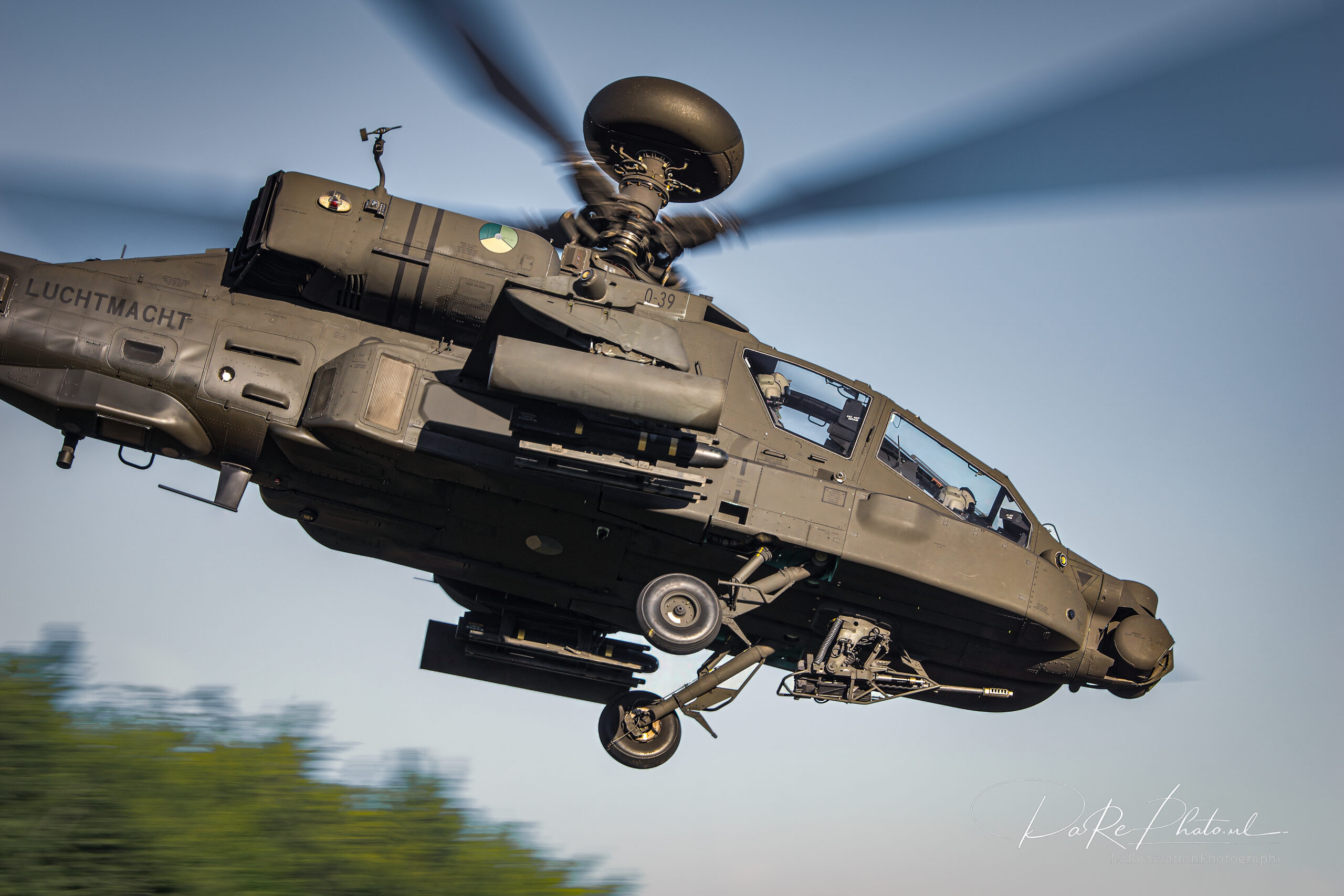
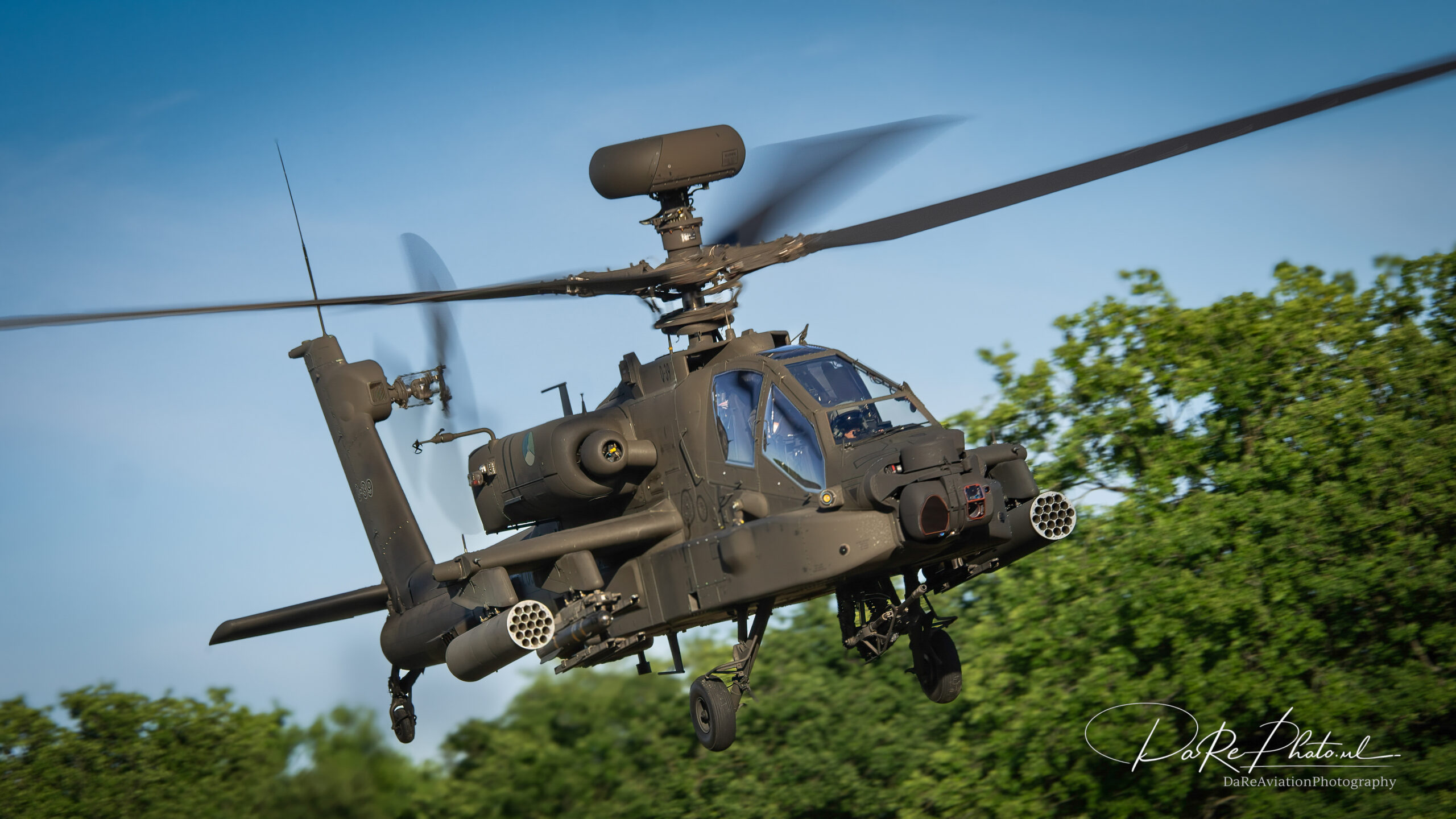
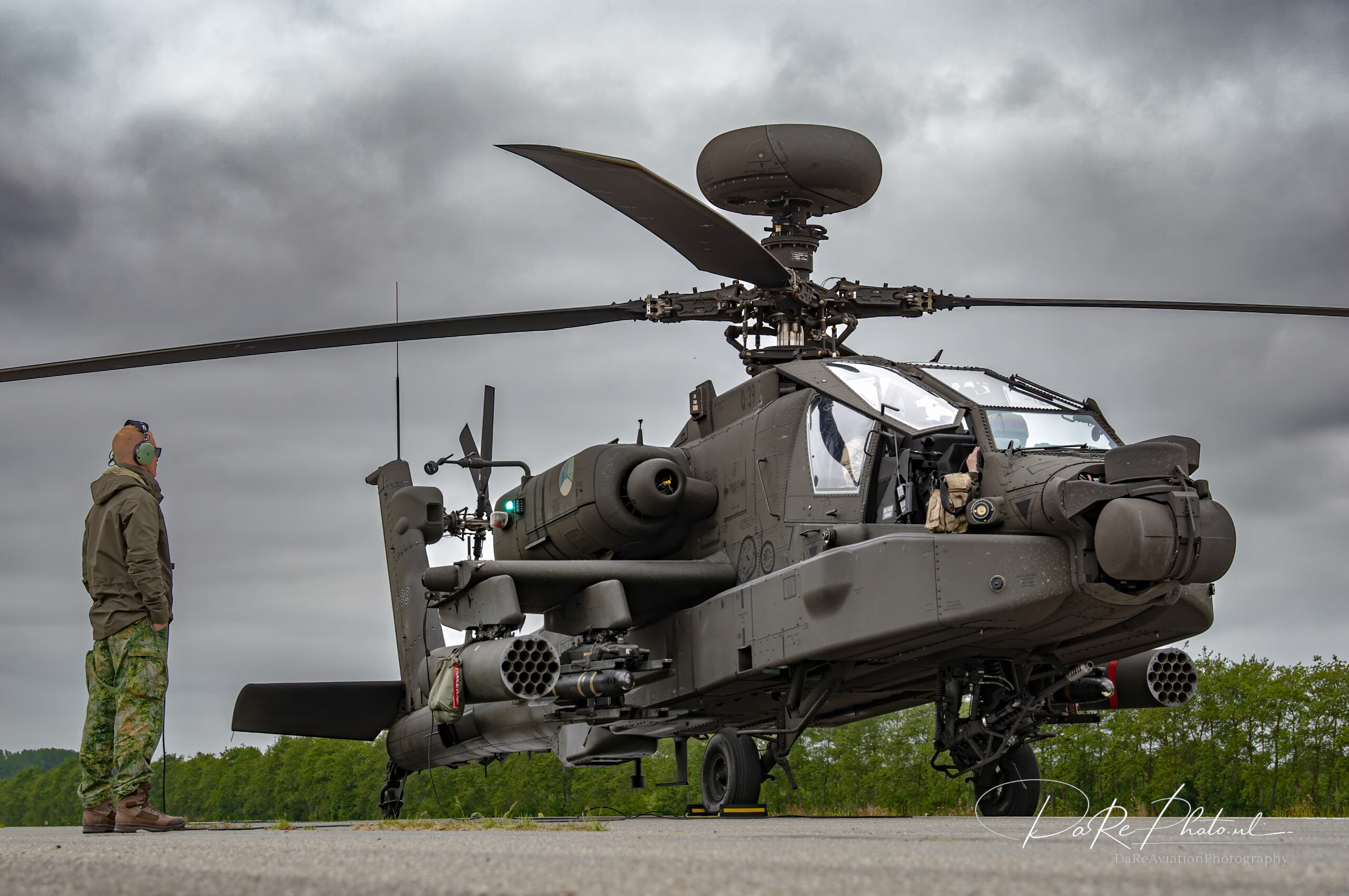
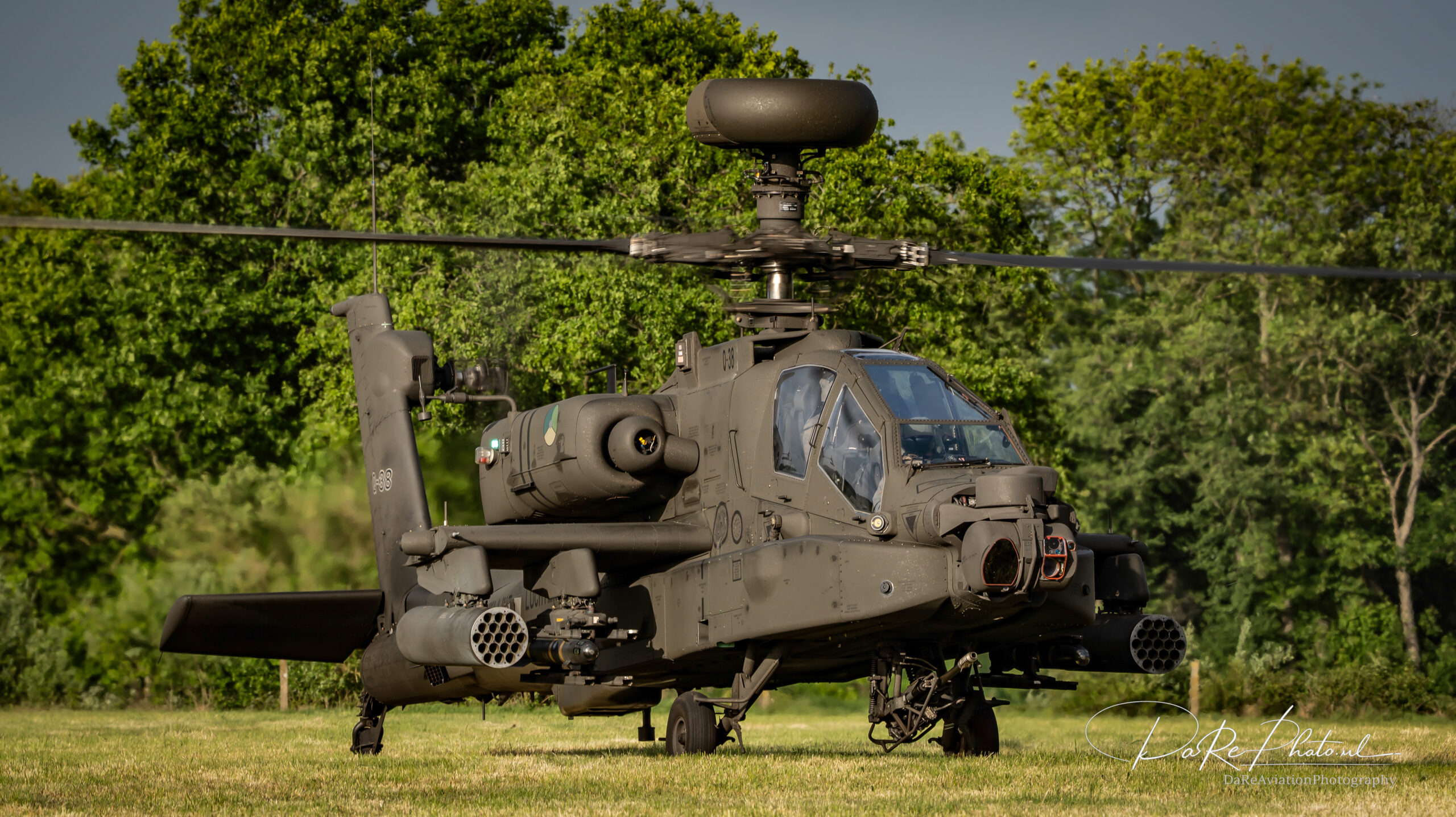
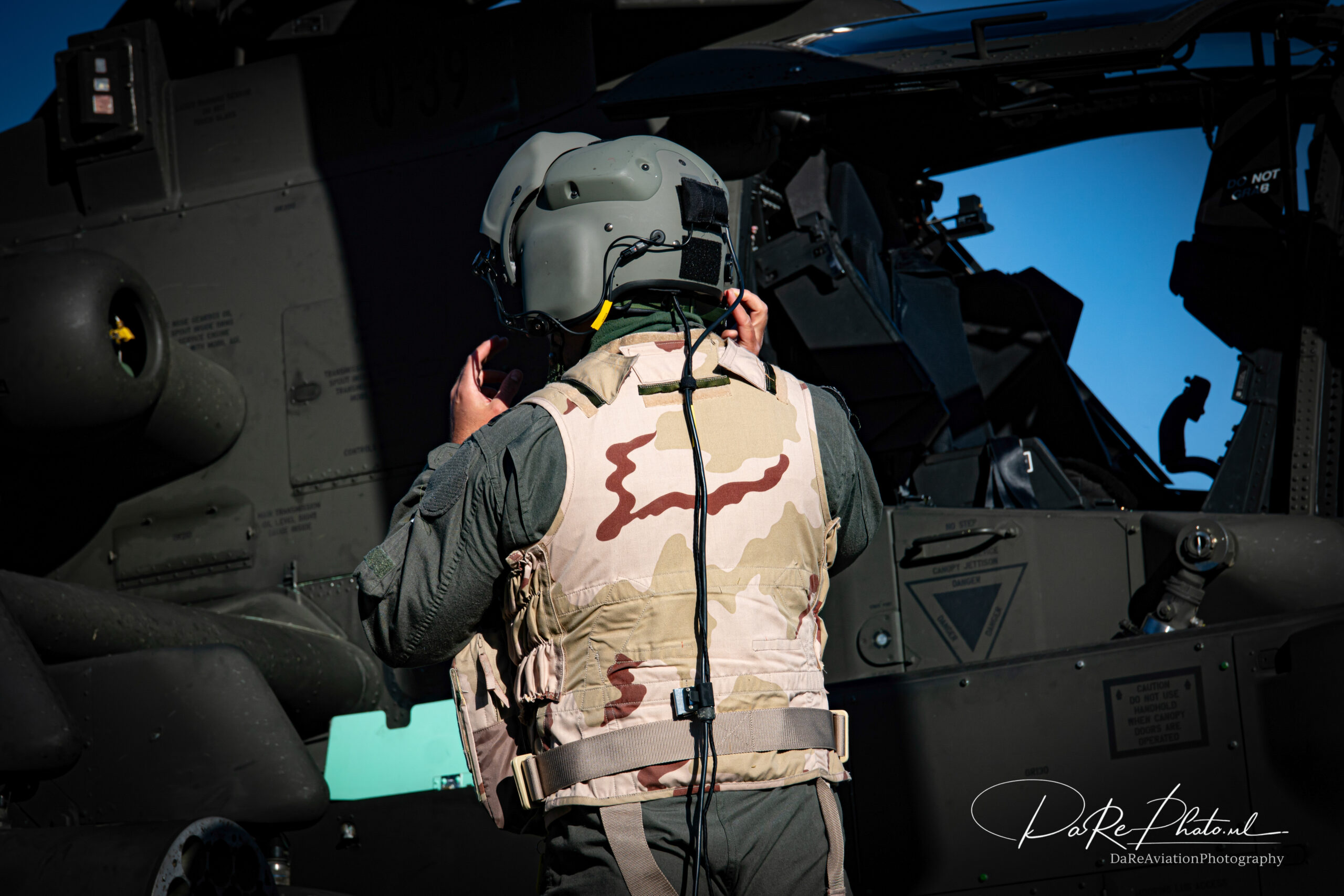
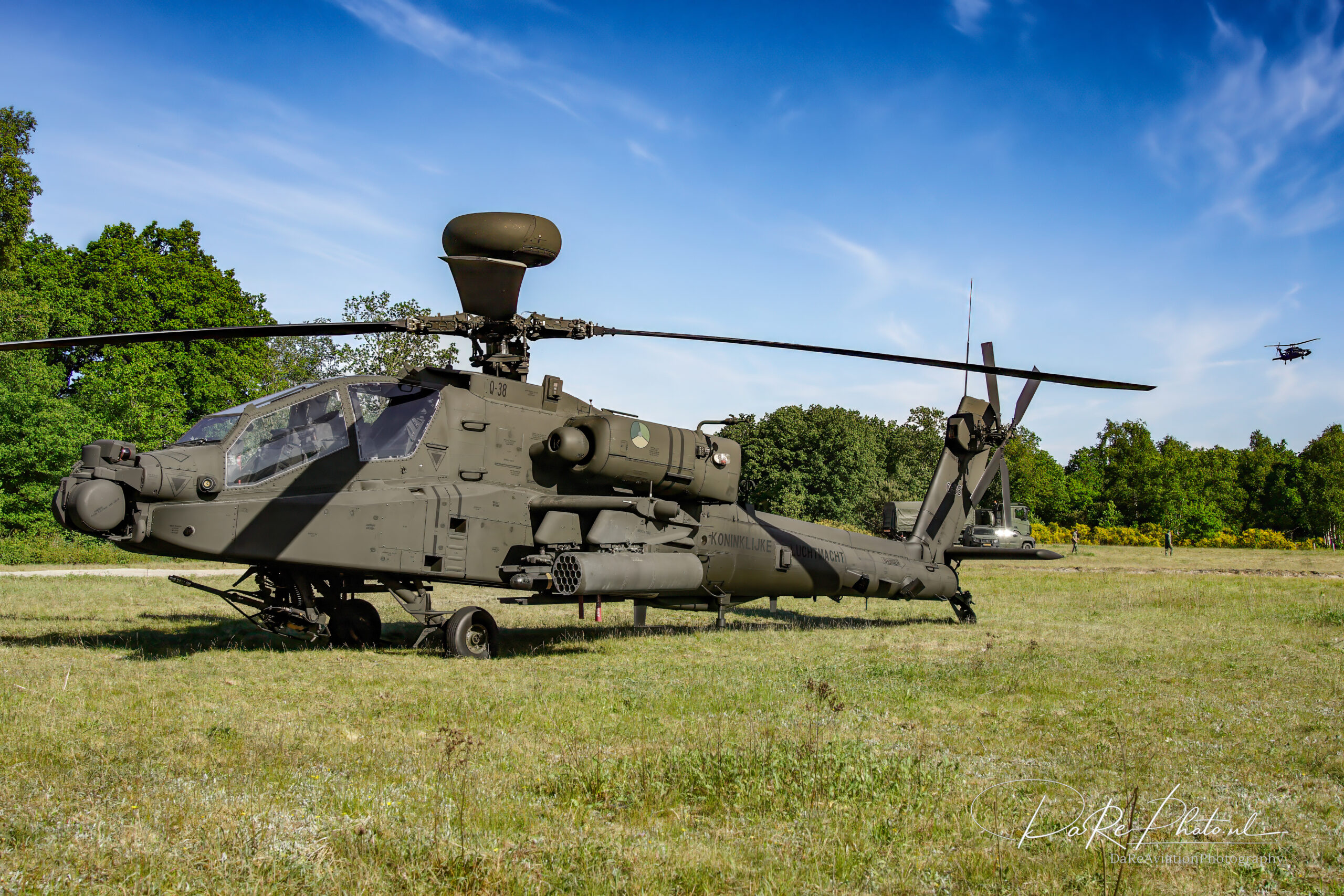
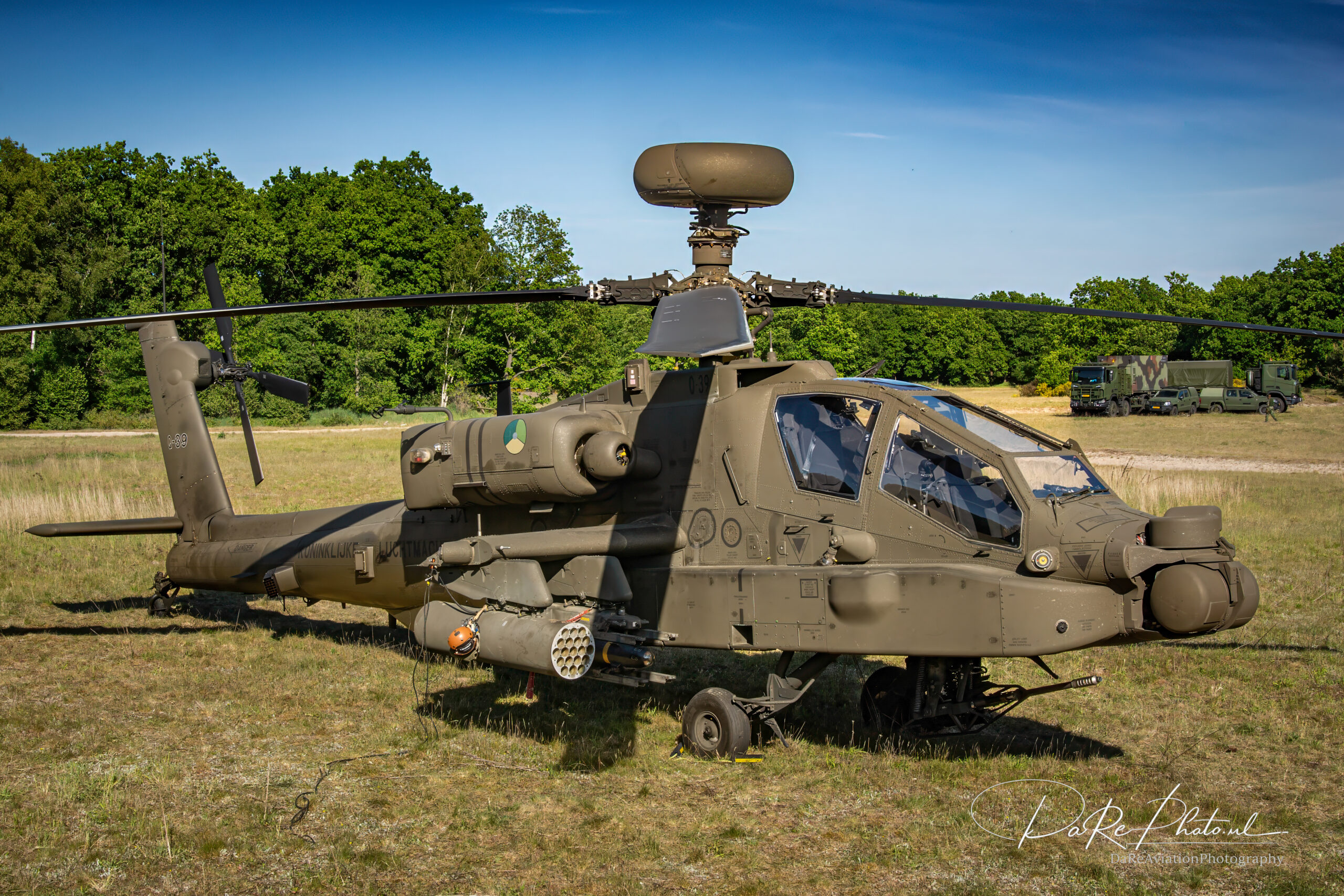
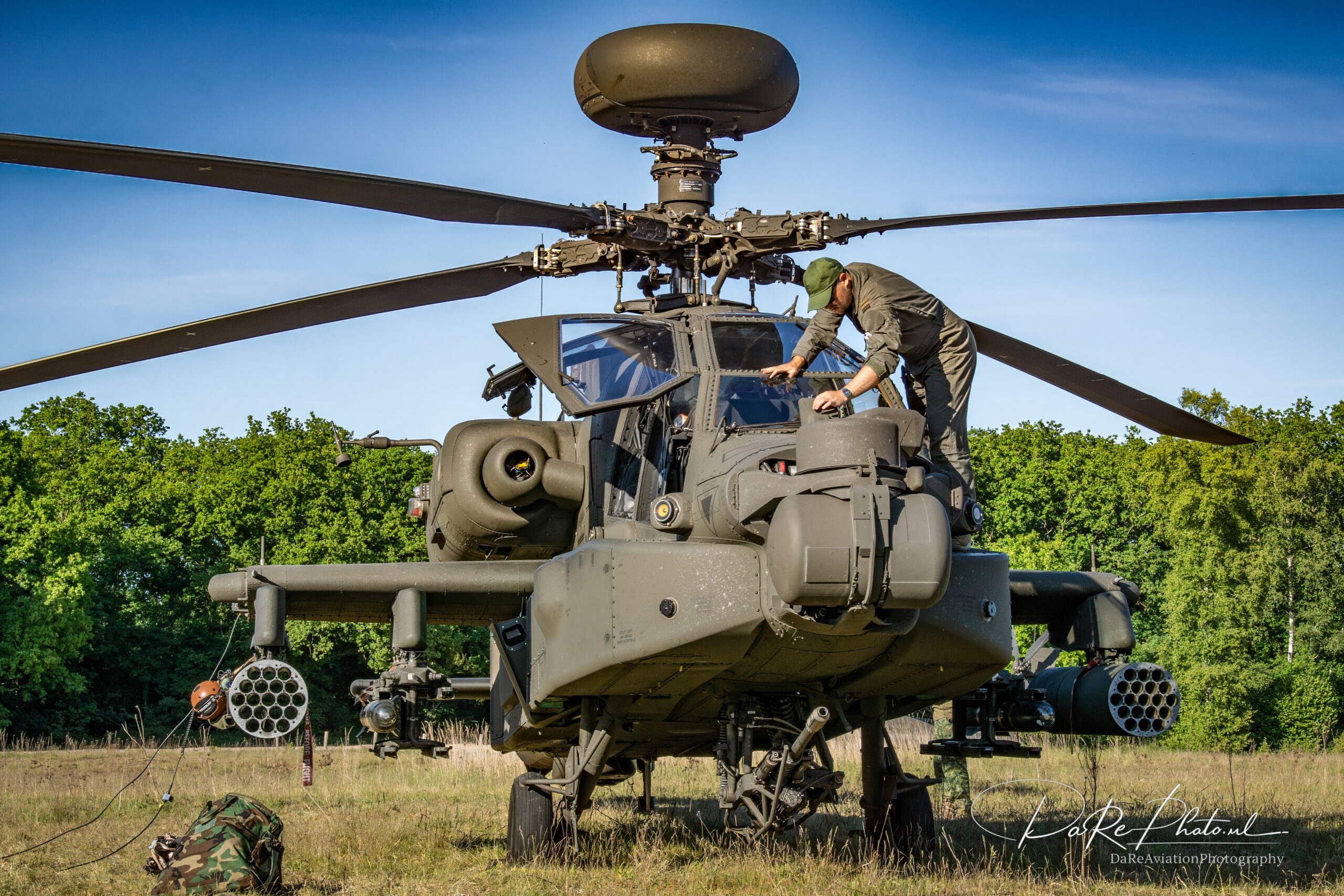
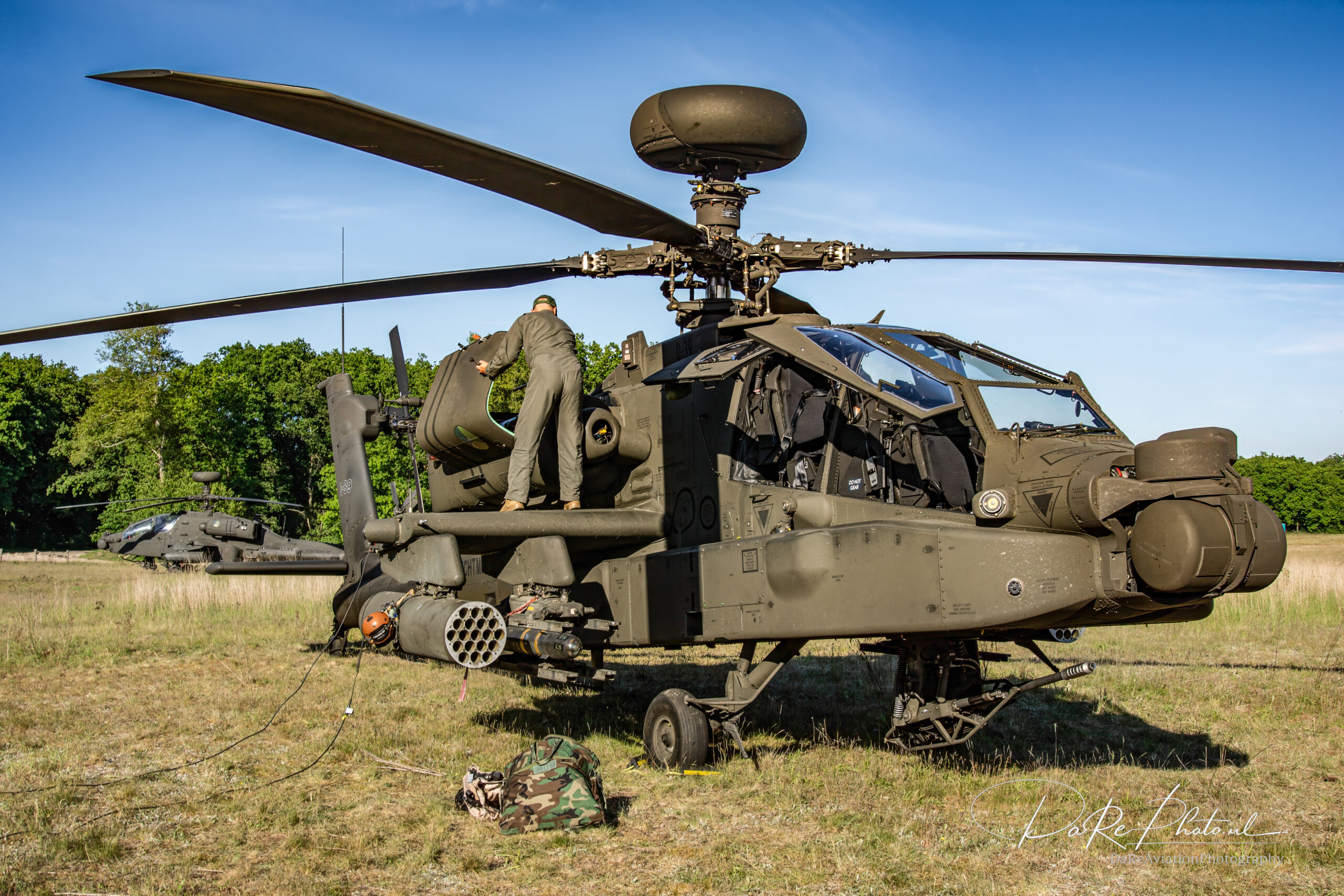
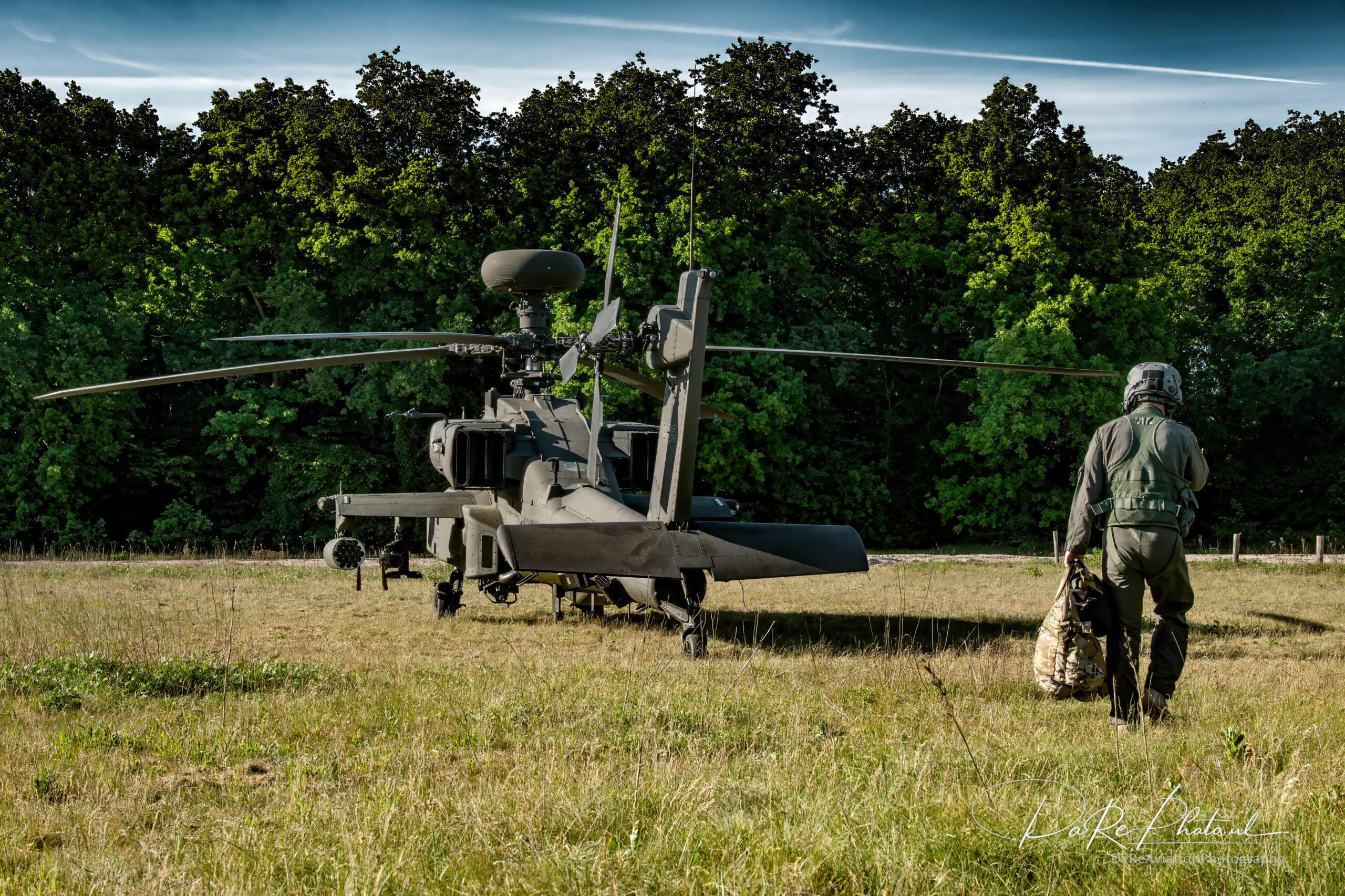
Across these exercises, 301 Squadron validated the AH-64E’s integration within the RNLASF’s Defence Helicopter Command and its interoperability with NATO partners. The aircraft’s advanced datalink, improved sensors, and enhanced engine performance have proven valuable during air-ground operations. Although no official figures on flight hours or live-fire employment have been publicly released, available reports confirm the use of full-mission profiles simulating armed engagements, overwatch, and rapid redeployment.
By the end of 2025, the RNLASF’s transition to the AH-64E had moved from initial conversion to full operational deployment. Combined experiences of the exercises Tac Blaze, Centaur Wrath, Falcon Spring, and Falcon Autumn have collectively marked the AH-64E’s establishment as a core element of Dutch attack aviation and NATO strike operations.
“ Preparing for the future “
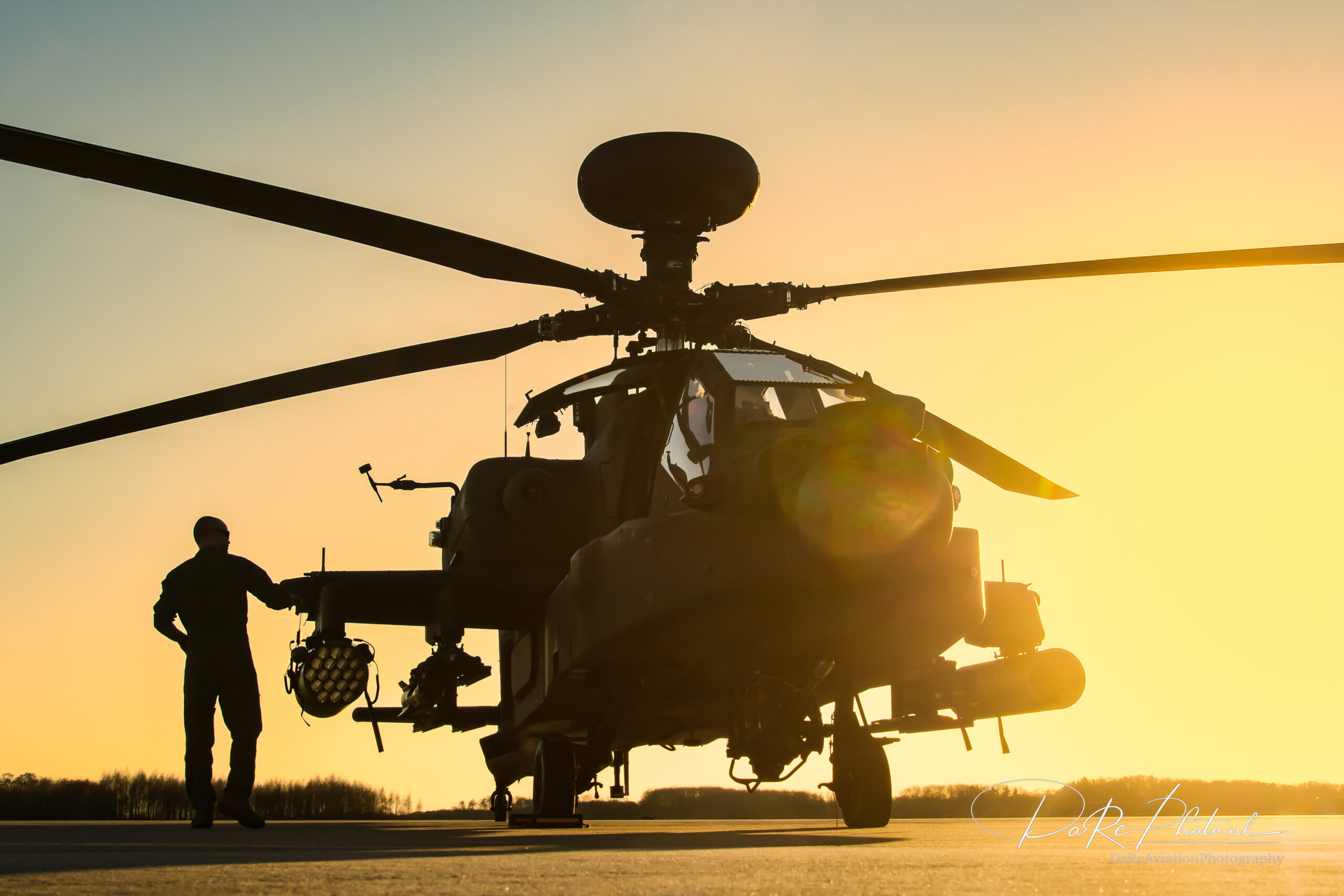
The mission of 301 Squadron is no longer a pure “fly‑and‑shoot” task; it is now a data‑driven, network‑integrated operation in which precision, flexibility and teamwork are the core elements. Thanks to the technological leap to the AH‑64E and an adapted training‑and‑maintenance model, the squadron can now support today’s asymmetric conflicts faster, more accurately, and with greater availability. This was tested during a recent Agile Tiger exercise, a collaboration with 313 squadron flying the F-35A.
Loekie explains:
“During Agile Tiger the focus was on integrating platforms to carry out a specific task. The result is that we complement each other as a weapons system and can achieve even better effects together. In terms of mindset we shared many similarities, which allowed us to set up a solid joint‑training program from the bottom up.”
At the same time, the contemporary threat environment is being reshaped by the explosive growth of unmanned aerial systems. Small‑hand‑launched ISR drones, loitering‑munition “kamikaze” platforms, and large swarms of cheap, low‑altitude craft now proliferate on battlefields around the world.
Revealing positions of the Echo before an attack is launched, overwhelming cockpit sensors and data‑links with massive, simultaneous tracks and deliver kinetic blows against low‑flying helicopters during ingress or egress could be a consequence regarding drone attacks. To cope with it, training has been re‑engineered to reflect these new realities. “
Conclusive, 301 Squadron is no longer a solitary Apache squadron; it is a high‑tempo, network‑integrated combat team capable of thriving in today’s contested, drone‑dense battlespace. Its recent successes in exercises and its ongoing doctrinal evolution demonstrate that the squadron is fully prepared to meet and shape, the challenges of modern asymmetric warfare.
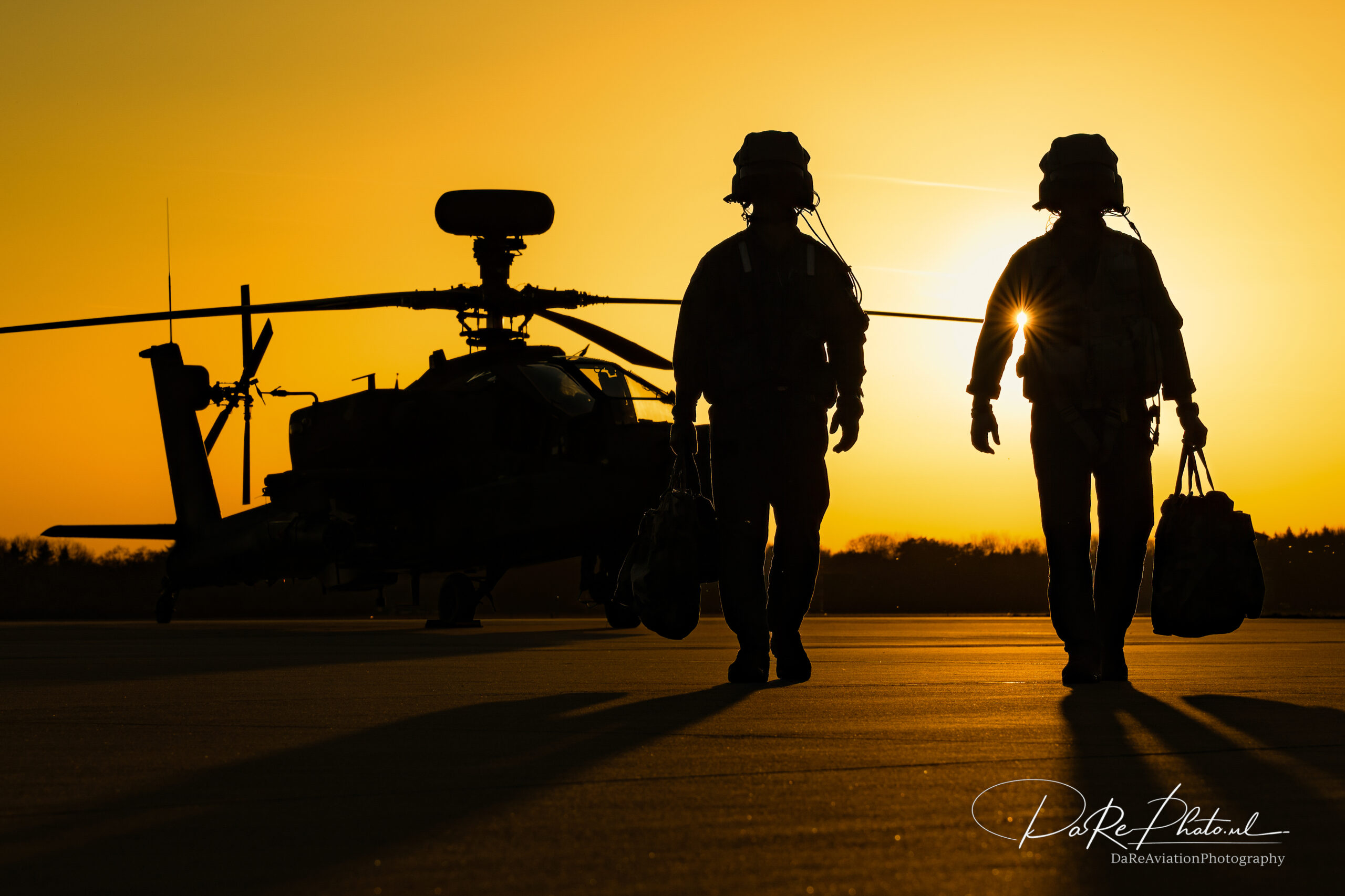
I would like to express my sincere gratitude to the personnel of 301 Squadron, with special thanks to ” Loekie “, as well as the Communications Section of the Defence Helicopter Command, for their outstanding support and for providing me with this incredible opportunity