Written by Danny Reijnen / Pictures with watermark by Author
The United States Navy (USN) versions of the Lockheed Martin F-35 Lightning II are significantly different from the F-35A for the United States Air Force (USAF). The F-35 is nicknamed ‘Fat Amy’ because the shape of its fuselage where the weapons are stored internally. Another nickname is ‘Battle Penguin’ for having relatively small wings compared to its length, resembling a penguin. The USN is incorporating its 5th Generation technologies into its carrier strike groups where – so far – it has replaced single squadrons of F/A-18E Super Hornets in some carrier air wings (CVWs). Danny Reijnen, assess the successful implementation of the F-35C in the operational Strike Fighter Squadrons.
A streamlined carrier aircraft
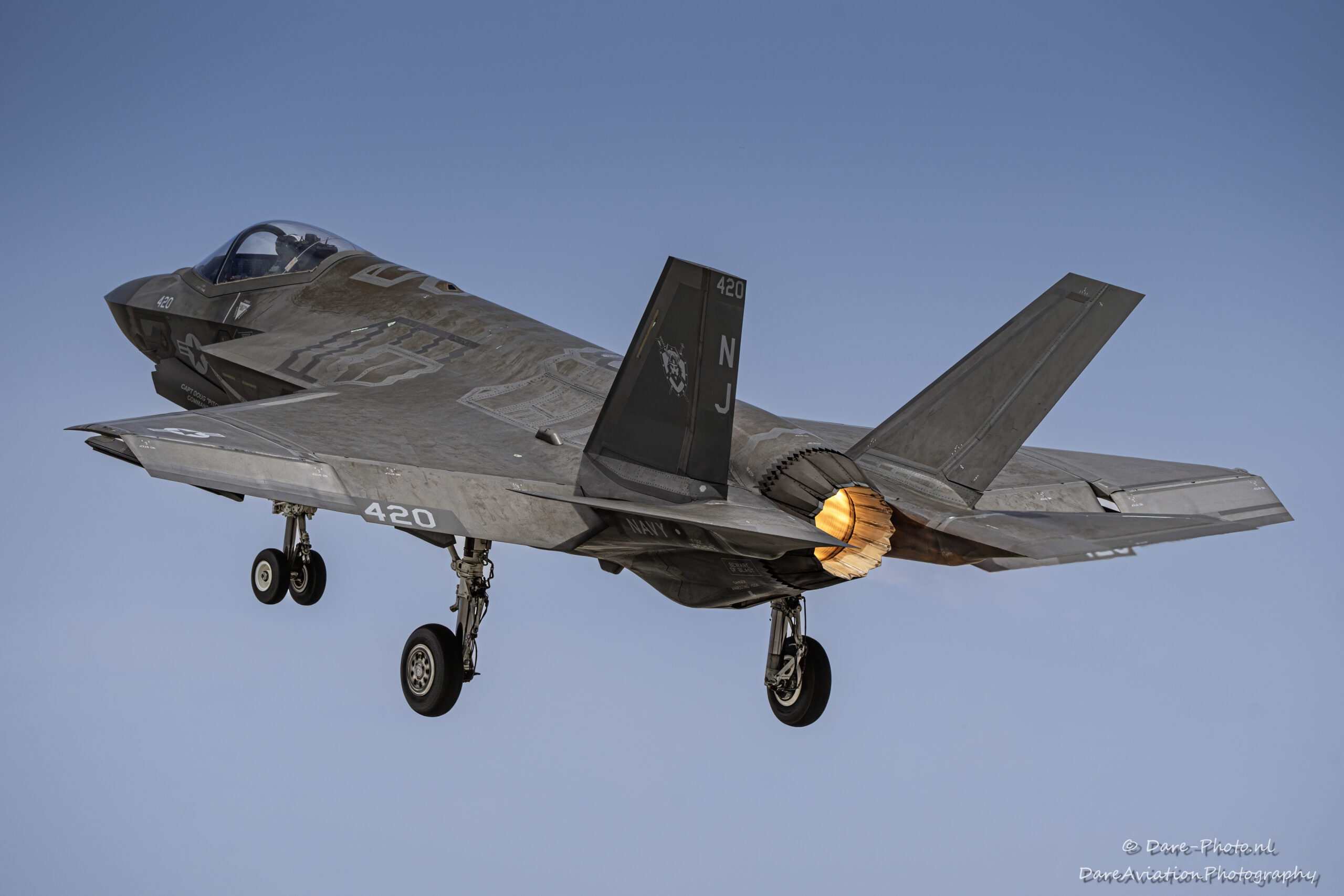
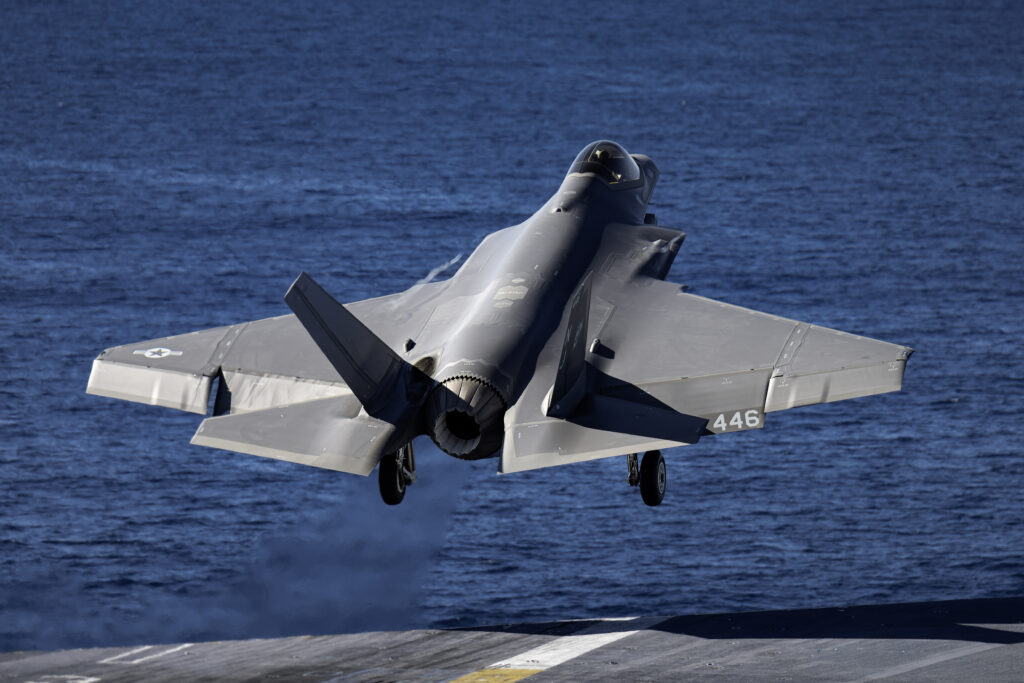
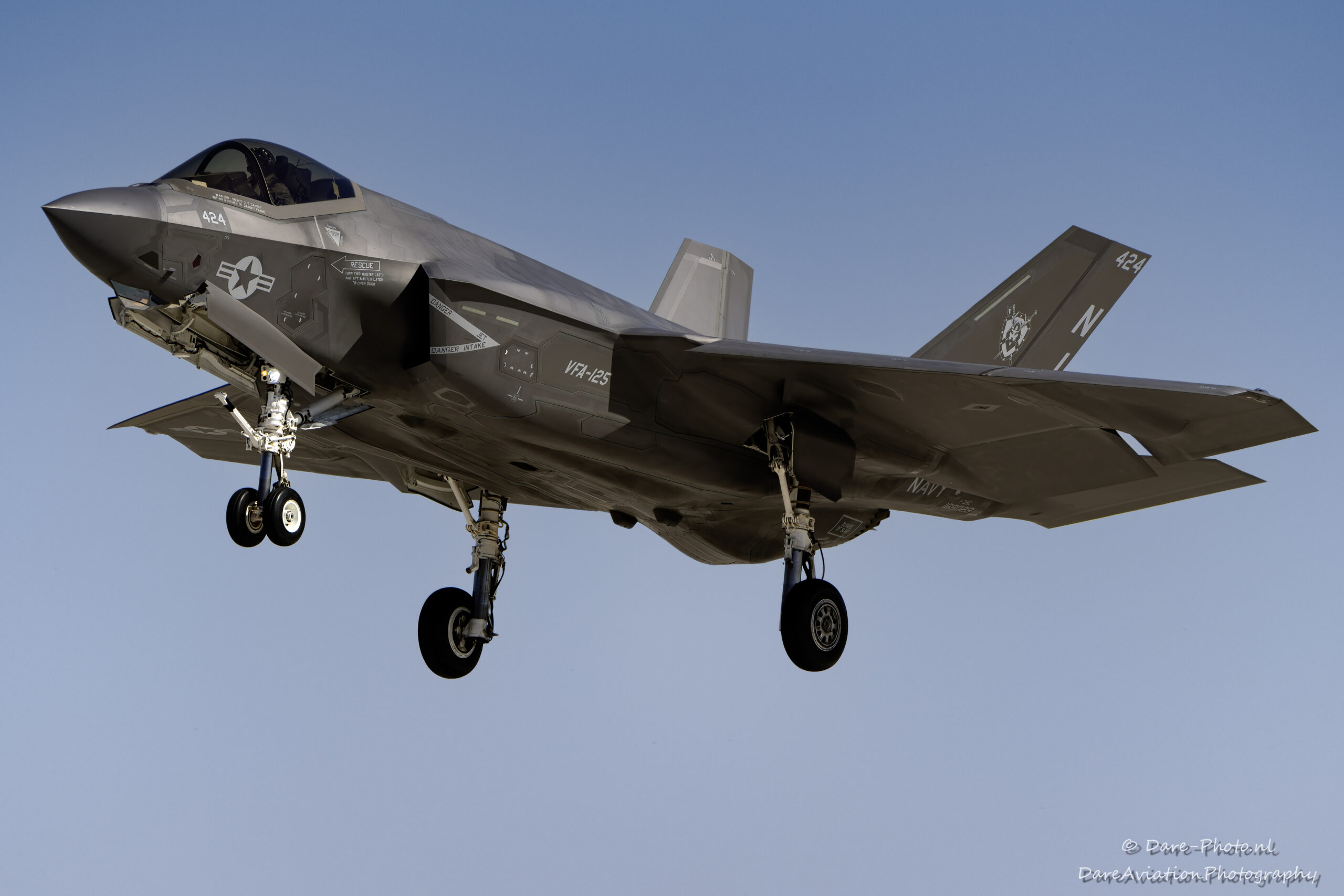
The F-35C is the Navy’s first stealth aircraft, built to endure the rigors of carrier operations. Its internal structure is reinforced to withstand the forces of catapult launches and arrested landings. The aircraft features a larger wingspan, enhancing its range and improving low-speed handling. Like the Marine Corps variant, the F-35C includes a refueling probe on the right side of the forward fuselage. In terms of range and payload, it surpasses legacy strike fighters. Its weapon systems, cockpit layout, radar, countermeasures, and other key features are largely consistent with the other F-35 variants, offering unparalleled multirole versatility.
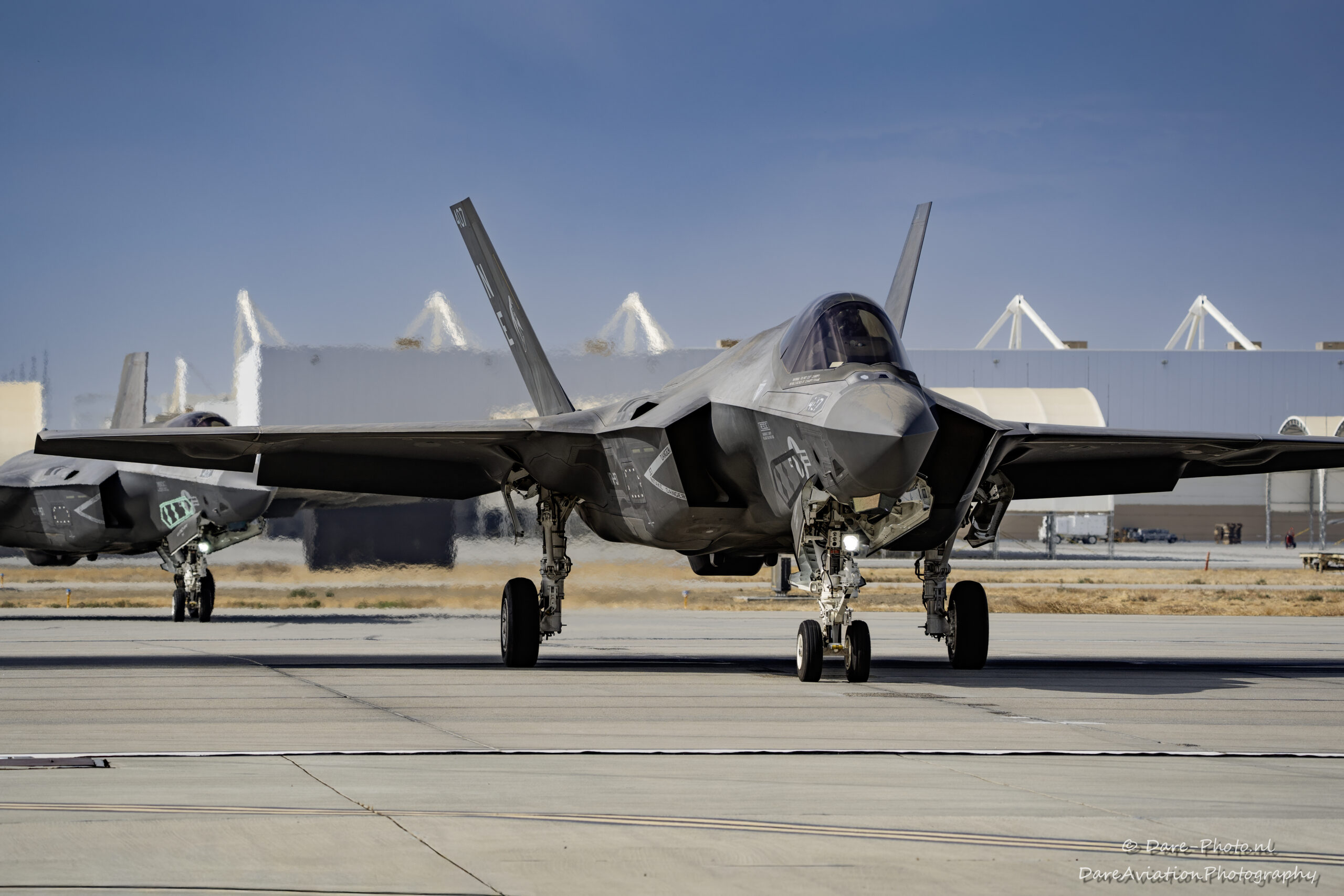
The first flight of the F-35C took place on June 6, 2010 and the first production example (BuNo 168733) was delivered to the Navy on June 22, 2013.
The Joint Strike Fighter Wing (JSFW) is the first operational command in the United States Navy dedicated exclusively to the F-35C. Its creation reflected a generational shift in naval aviation, marking the transition from the fourth-generation F/A-18 Hornet and Super Hornet force to a mixed fleet that incorporates stealth, sensor fusion, and networked warfare capabilities.
The wing was formally established on October 1, 2020, at Naval Air Station Lemoore, California, the Navy’s master jet base. It absorbed oversight of all F-35C squadrons and training units, consolidating administration, readiness generation and tactical development under a single command. The activation followed years of planning as the Navy integrated the Joint Strike Fighter into carrier air wings.
Strategic Importance
The Joint Strike Fighter Wing represents more than an administrative unit, it is the centerpiece of naval aviation’s modernization. Its mission aligns with the Navy’s Distributed Maritime Operations (DMO) concept, providing stealth, electronic warfare, and networked targeting to enhance the lethality of the carrier strike group.
Moreover, the wing acts as the Navy’s bridge into the fifth-generation era, ensuring that the F-35C complements and eventually succeeds the Super Hornet as the backbone of carrier air power.
Fleet Replacement preparations – Training Lightning “nuggets”
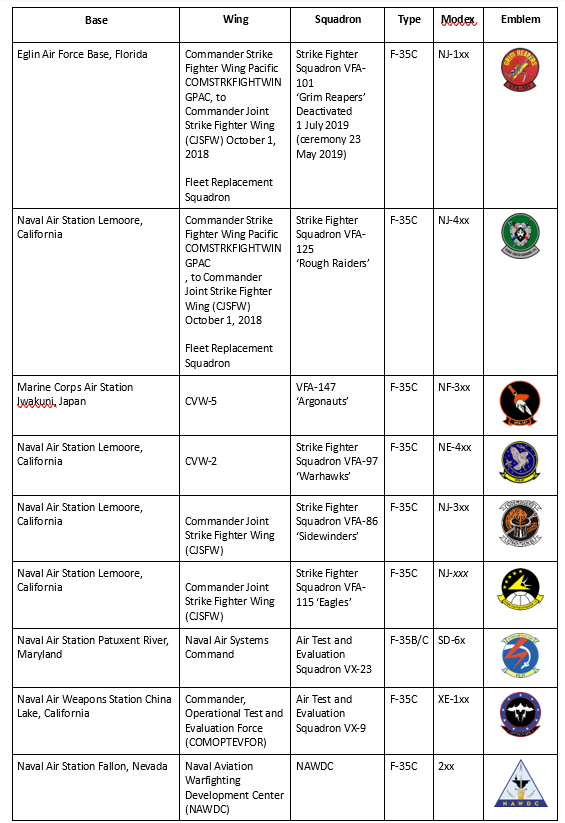
The recipient of the first fleet F-35C was Strike Fighter Squadron (VFA)-101 ‘Grim Reapers’. Having previously been in existence as Fighter Squadron (VF)-101, the ‘Grim reapers’ was the Navy’s last Fleet Replacement Squadron (FRS) for the F-14 Tomcat until its deactivation on September 30, 2005.
On May 1, 2012, the squadron was reactivated at Eglin AFB, Florida – home to the initial tri-service training center for all F-35s under the USAF’s 33rd Fighter Wing and redesignated from a Fighter Squadron to a Strike Fighter Squadron.
The inaugural F-35C pilot training course for VFA-101’s future instructor pilots concluded in January 2013, which led to a second course launching in June 2013. The first official VFA-101 sortie (using BuNo 168734) launched from Eglin in August 14, 2013 and the squadron officially re-constituted in a ceremony at the Florida base on October 1, 2013.
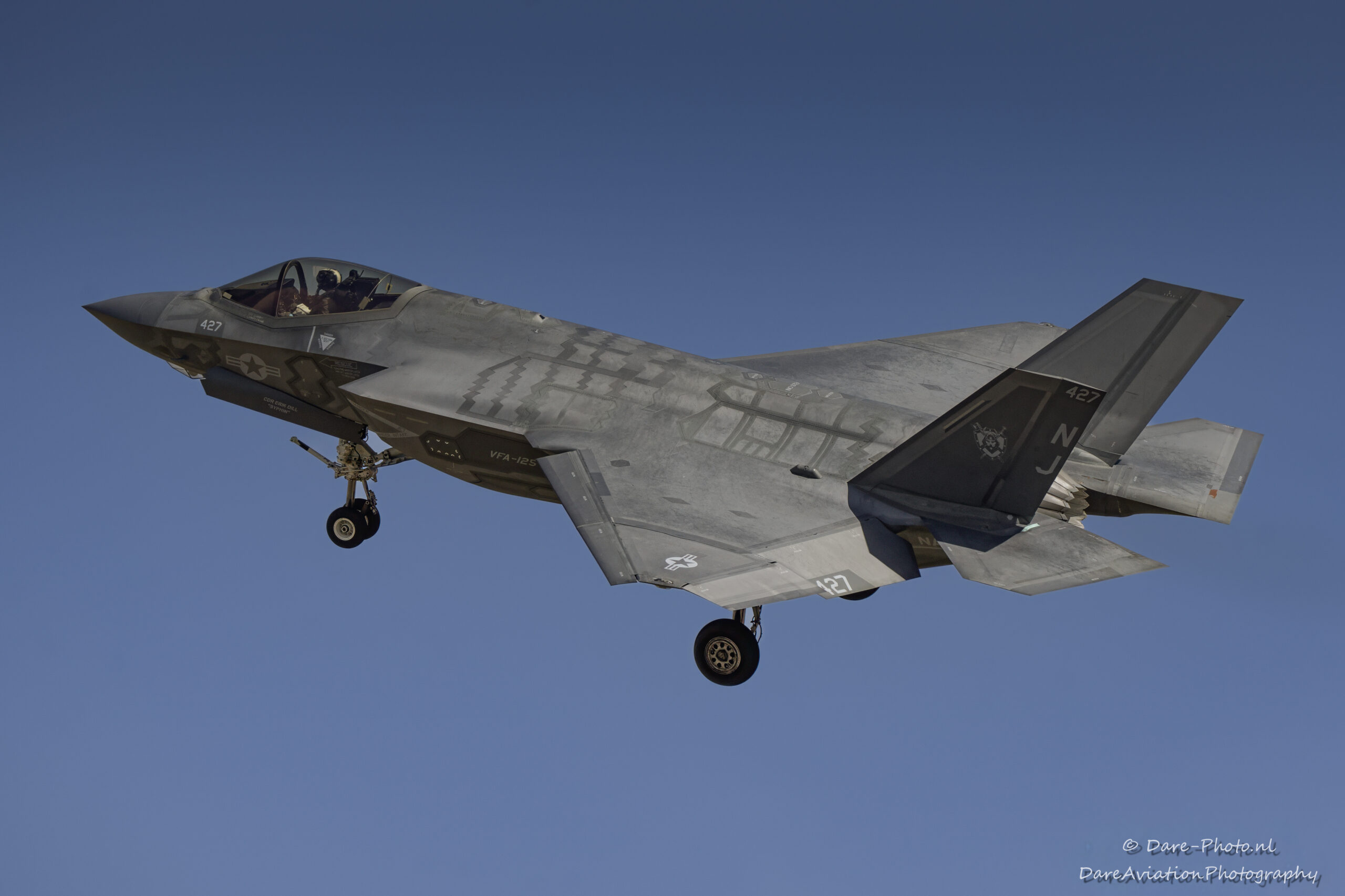
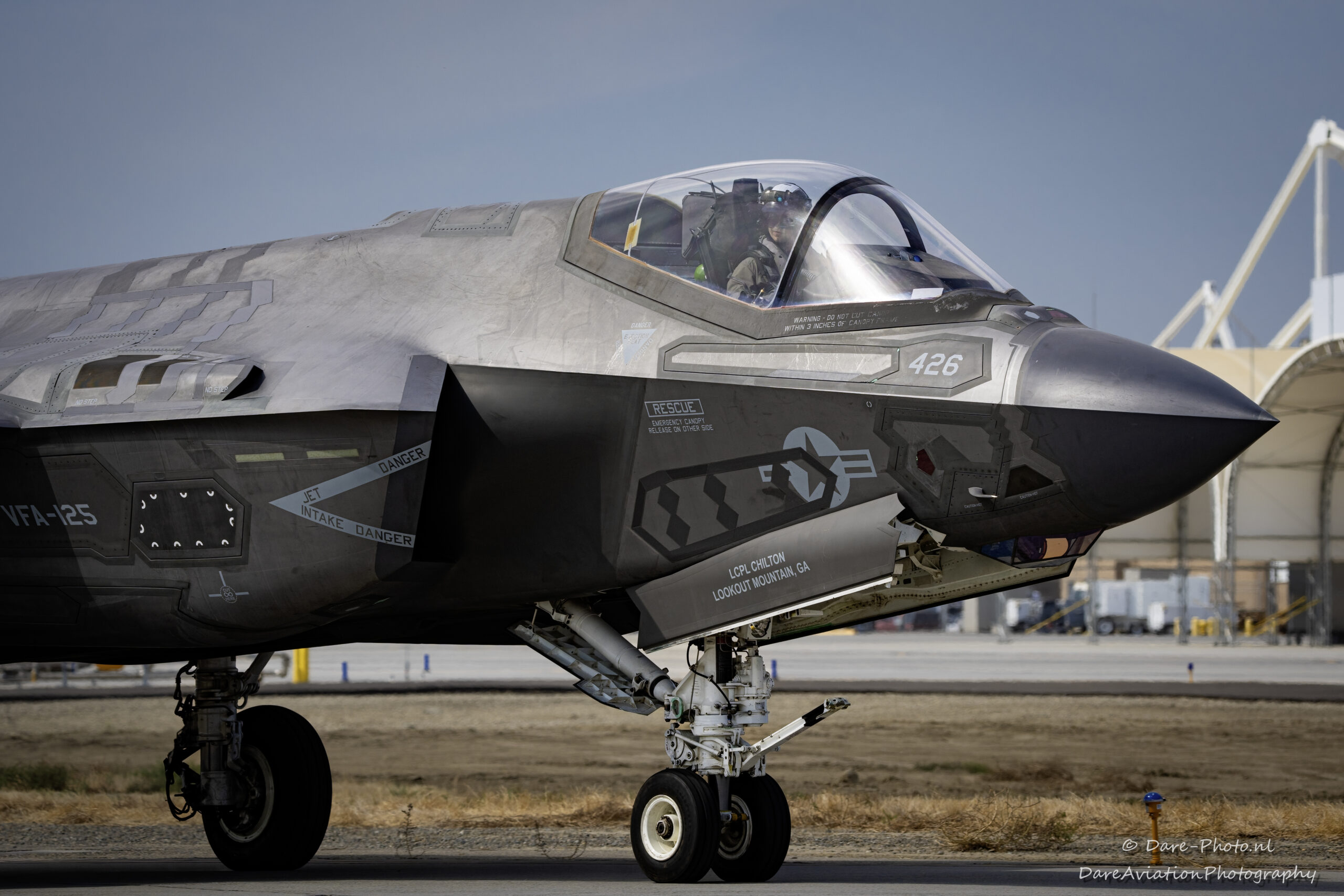
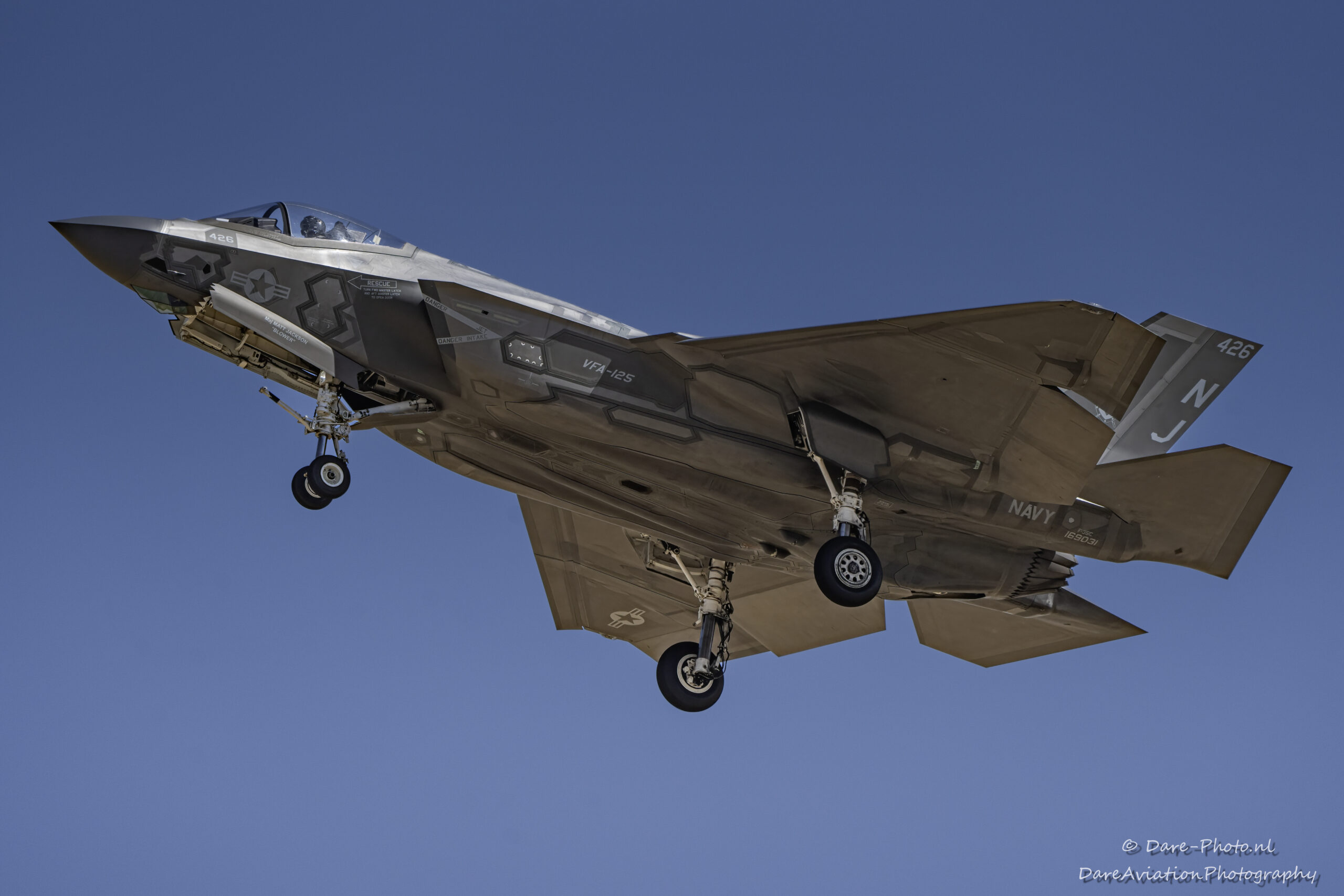
VFA-125 ‘Rough Raiders’ had served as the legacy F/A-18 Hornet FRS at Naval Air Station (NAS) Lemoore, CA until deactivation on October 1, 2010 with the remaining Hornet training incorporated into the Super Hornet FRS, VFA-122 ‘Flying Eagles’. On January 12, 2017 VFA-125 was re-activated at NAS Lemoore as the second F-35C Lightning II FRS and received their first batch of four aircraft, from VFA-101, on January 25, 2017.
As all F-35C operations, training and maintenance were to be centralized at Naval Air Station Lemoore, California, the Chief of Naval Operations Admiral John M. Richardson promulgated a notice to deactivate VFA-101 on September 10, 2018, which was completed on May 23, 2019. This meant, despite its success, the mission of VFA-101 came to an end.
During the fall and winter of 2018, the two squadrons worked together multiple times as an integrated FRS team and CDR Adan Covarrubias, commanding officer of VFA-101, assumed command of VFA-125 ‘Rough Raiders’. “We integrated VFA-125 maintenance practices into what we were doing, and then vice versa, VFA-101 into 125. We kind of took the best of everything, figured out what worked for everybody, and then came up with the best process,”
VFA-101 trained its last pilot in March and April 2019 and has slowly been sending its aircraft and gear out to Lemoore,” Covarrubias said. The last two jets remaining in the squadron flew off the Eglin AFB flight line for the last time on 23 May 2019 headed for California.
Capt. Max McCoy, commodore of the Joint Strike Fighter Wing at NAS Lemoore, explained ahead of VFA-101’s deactivation ceremony that setting up early F-35C efforts alongside the Air Force at Eglin proved to be a very smart decision. The service had already learned a lot about maintaining the new jets and had established a collaboration with Lockheed Martin experts on the base.


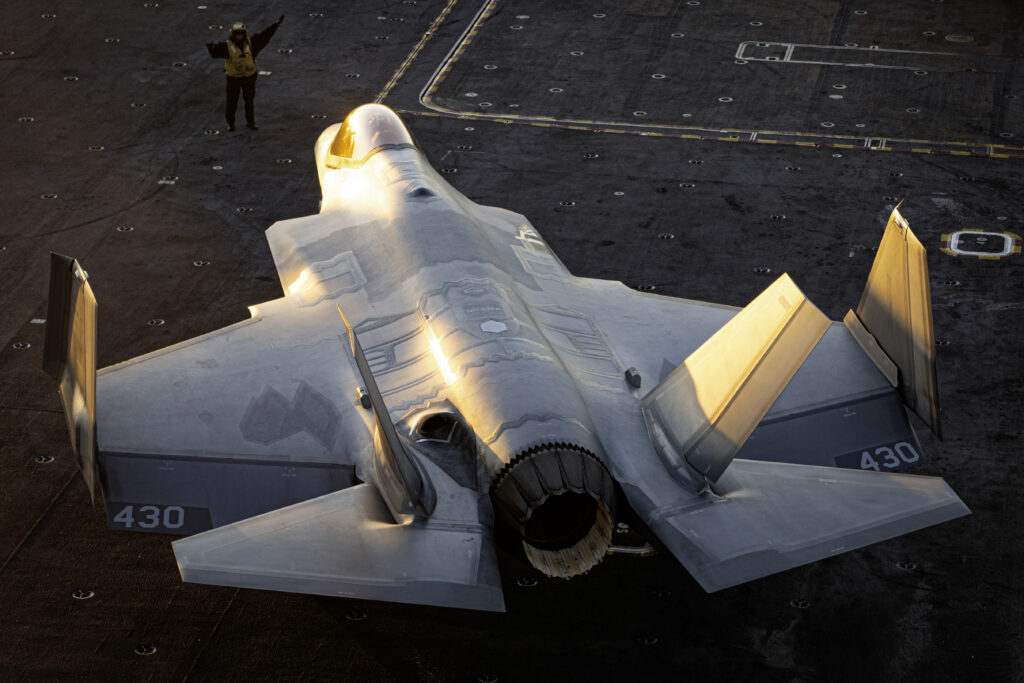
Conversion training on the F-35C Lightning II, the Role of VFA-125 “Rough Raiders”
As the administrative and operational hub, the Joint Strike Fighter Wing oversees the Fleet Replacement Training at VFA-125 “Rough Raiders”, preparing new aviators and maintainers. The Standardization and tactical development, ensuring F-35C operations align with evolving carrier strike group doctrine. Also the deployment readiness generation, certifying squadrons before they join carrier air wings.
The wing’s role parallels that of the legacy F/A-18 wings but incorporates new challenges, such as maintaining low-observable coatings, managing advanced data fusion systems, and integrating the F-35C into a joint and coalition networked battlespace.
The introduction of the F-35C Lightning II into United States Navy carrier aviation required not only new aircraft but also a revolutionized training pipeline. Unlike the F/A-18 Hornet and Super Hornet, the F-35C brings advanced stealth, sensor fusion, and networked warfare capabilities that demand a different approach to pilot and maintainer preparation.
At the center of this effort stands Strike Fighter Squadron (VFA)-125) “Rough Raiders,” the Navy’s designated Fleet Replacement Squadron (FRS) for the F-35C, based at Naval Air Station Lemoore, California. Reactivated in 2018, VFA-125’s primary mission is to train and qualify Navy aviators and maintainers to operate and sustain the F-35C in the fleet.
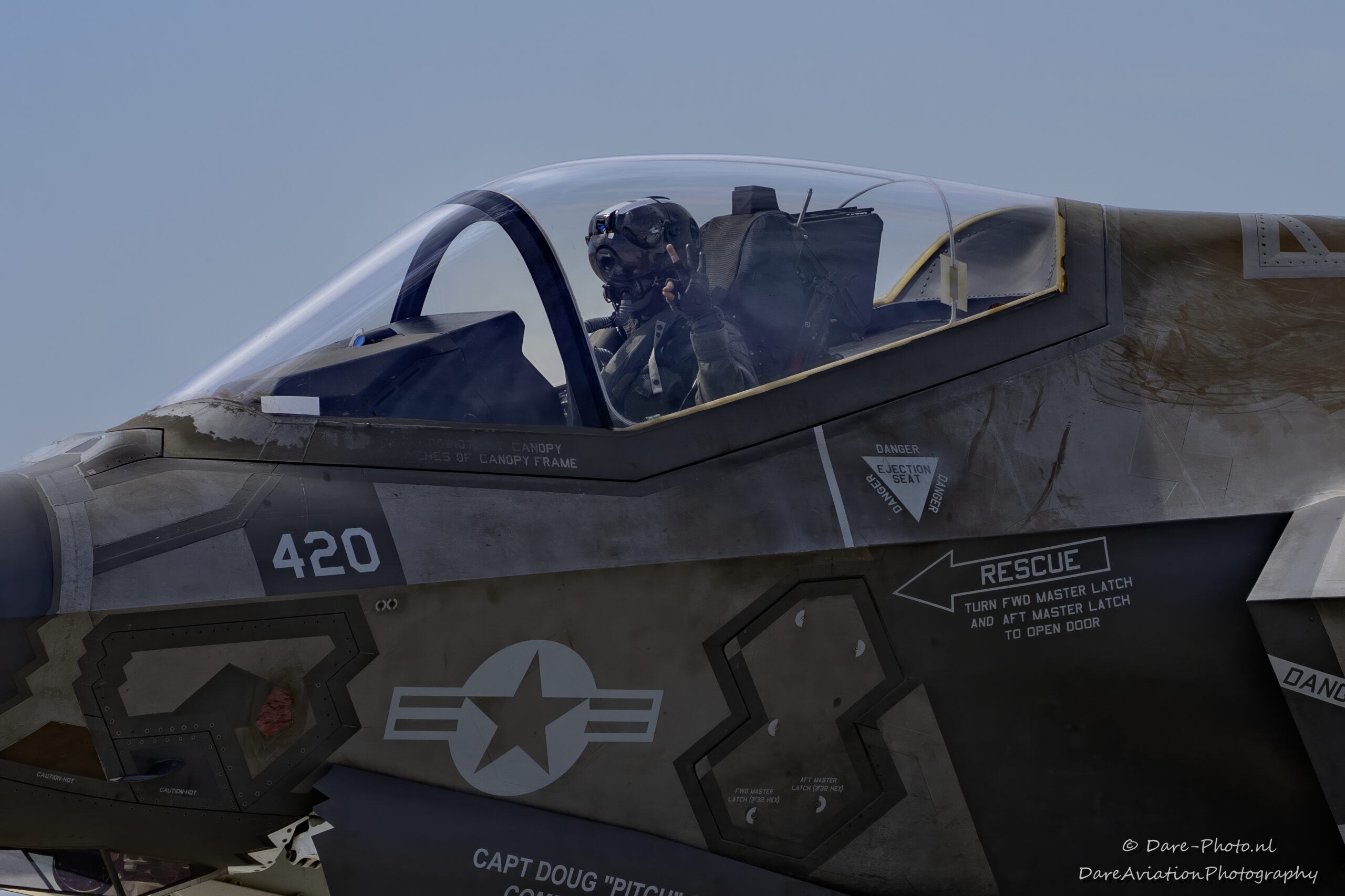
Pilot training overview
Aviators enter into the F-35C program as they arrive at VFA-125 from advanced strike training in the T-45C Goshawk or as transition pilots from other fleet squadron squadrons, typically the F/A-18E/F Super Hornet). During the screening process, candidates undergo an initial assessment of flying proficiency, academic readiness, and security clearances, necessary for handling sensitive mission data systems unique to the F-35.
Training starts at the Ground School. In comprehensive classroom instruction on stealth airframe features, propulsion, electronic systems, sensor fusion, and the Autonomic Logistics Information System (ALIS)/Operational Data Integrated Network (ODIN) the aircraft systems are instructed in detail to the candidates.
The mission systems training covers the F-35’s radar, Distributed Aperture System (DAS), Electro-Optical Targeting System (EOTS), and data links. Additionally pilots learn tactical employment concepts of fifth-generation operations, electronic warfare support, and network-enabled tactics.
Once the students have passed and graduated for the theoretical phase, the training in the student will continue the training in the simulator. The simulator phase is critical due to the complexity and cost of a live flight hours. The simulators replicate carrier takeoffs and recoveries, air-to-air and air-to-ground missions, sensor management and data fusion and all relevant emergency procedures. The Simulator training allows pilots to become proficient in sensor integration and situational awareness management before flying the actual jet.
Once the simulator training is successfully completed the student proceeds to the next phase which involves actual flying hours in the F-35C. This stage involves basic aircraft handling, and includes training during day and night sorties to master the handling qualities, aerial refueling, and formation flying.
In the following stage air-to-air combat and beyond-visual-range engagements, radar employment, and networked targeting with data linked partners are trained. This stage is continued with air-to-ground strike training, comprising precision-guided munitions, Close Air Support (CAS) and Suppression/Destruction of Enemy Air Defenses (SEAD/DEAD) training in a fifth generation platform. The following stage comprises the training of the electronic attack & ISR missions, in which the student is using the F-35’s onboard electronic warfare suite and intelligence-gathering sensors.
Carrier Qualifications

One of the final milestones is day and night arrested landings on an aircraft carrier. This qualifies the aviator to deploy aboard an operational aircraft carrier at sea with the Fleet Replacement Squadron. During these qualifications the pilot has to complete ten successful day-time traps and eight successful night-time traps. Upon successful completion, the pilot is designated as a combat-ready F-35C aviator and is assigned to an operational squadron within the Joint Strike Fighter Wing.
Just as vital as pilot instruction, maintainer training at VFA-125 ensures that the F-35C can be sustained in carrier environments. This includes training to maintain all relevant aircraft systems, including the stealth coatings, avionics, propulsion, and weapons integration. The Low Observable (LO) Maintenance includes the specialized training for preserving radar-absorbing materials and coatings unique to the F-35. Maintenance training on the digital Logistics Systems includes the ALIS/ODIN for predictive maintenance, parts ordering, and fleet readiness tracking. The maintainers graduate ready to serve with fleet squadrons, ensuring operational availability of the Navy’s most advanced strike fighter.
Fleet Replacement Squadron – Broader Tasks and Responsibilities
The primary role of the Fleet Replacement Squadron (FRS) is the training and qualifying pilots, Naval Flight Officers, (NFO), and maintainers for operational squadrons. The secondary tasks involves supporting the tactical development of the Joint Strike Fighter Wing in evolving F-35C tactics, techniques, and procedures (TTPs). The tactical development also comprises the integration training in which the aviators are trained to work seamlessly with F/A-18E/F Super Hornets, EA-18G Growlers, E-2D Hawkeyes, and allied F-35 variants in joint/coalition operations.
The training process for the F-35C is significantly more complex than for legacy aircraft, reflecting the platform’s role as a stealth strike fighter, electronic warfare platform and ISR hub all in one. Through VFA-125 “Rough Raiders,” the Navy ensures that each new generation of pilots and maintainers is carrier-qualified, tactically prepared, and technologically fluent in operating the most advanced strike fighter ever fielded by naval aviation. VFA-125’s work under the Joint Strike Fighter Wing not only produces qualified aviators but also ensures that the carrier air wing of the future is ready to operate in contested environments against peer adversaries.
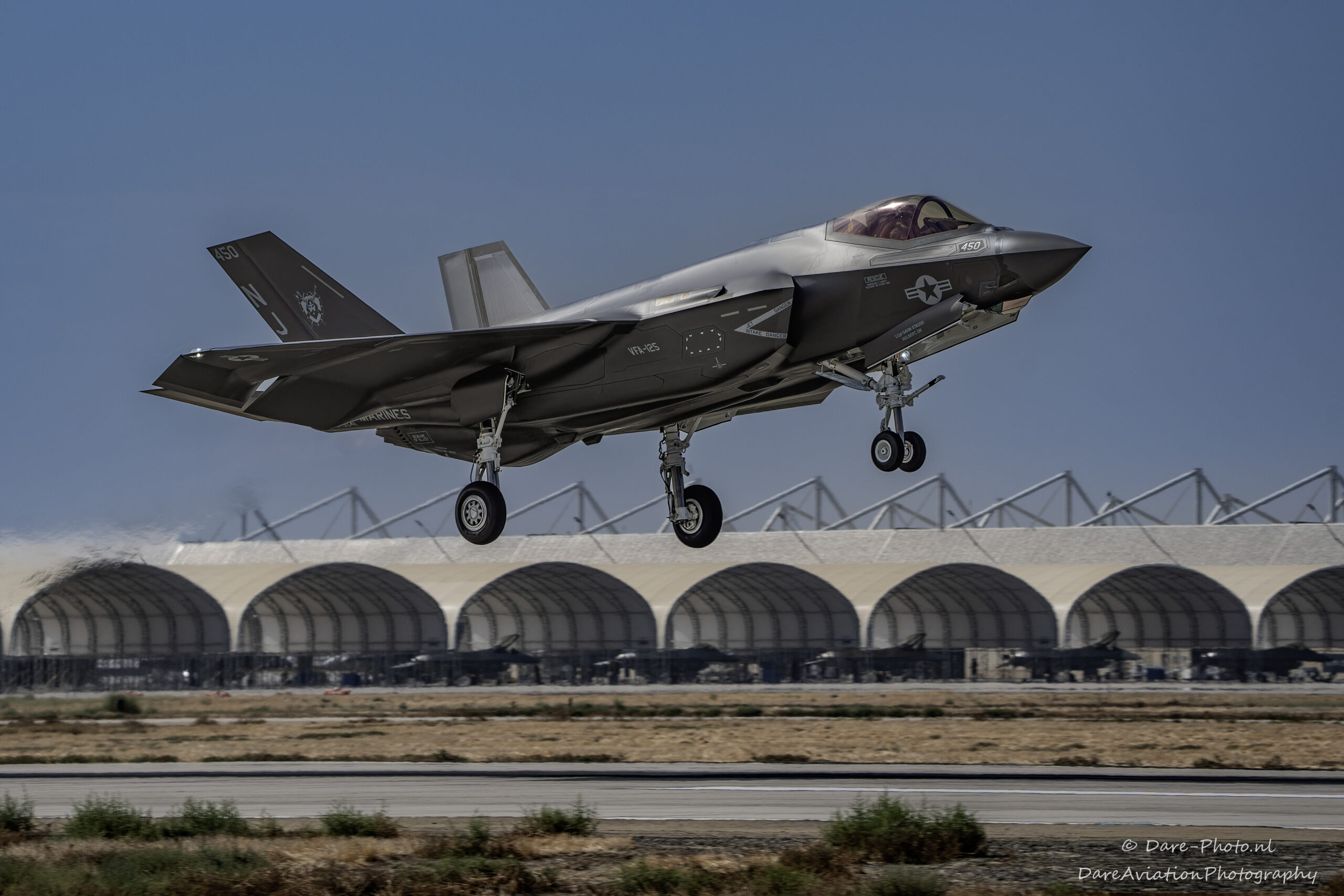
Marines training
The Fleet Replacement Squadron also provided the conversion training for the United States Marine Corps squadrons that completed or are in the process of completing their transition to the F-35C. Marine Fighter Attack Squadron 314 ‘Black Knights’ operating the aging F/A-18A++ Legacy Hornet started their conversion to the F-35C Lightning II in June 2019 and was the runner up after Strike Fighter Squadron VFA-147 achieved their Safe for Flight status. On 21 June 2019, the squadron retired the F/A-18A++ and began training on the F-35C. The ‘Black Knights conversion training was provided by Strike Fighter Squadron VFA-125 ‘Rough Raiders” VMFA-314 received their first factory fresh aircraft on 1 January 2020 and were based at MCAS Miramar.

Marine Attack Squadron VMA-311 was decommissioned at MCAS Yuma on 15 October 2020 with the AV-8B Harrier IIs being relinquished and moved to 309th AMARG for long term storage. VMFA-311 ‘Tomcats’ was reactivated on 14 April 2023 to start their conversion training as the second Marine Fighter Attack Squadron to the F-35C. VMFA-311 ‘Tomcats’ assigned to Marine Aircraft Group MAG 11, 3rd Marine Aircraft Wing (MAW), declared initial operational capability on July 31, 2024.
Marine Fighter Attack Squadron VMFA-251 ‘Thunderbolts’ is the first East Coast based squadron to start their conversion, trading their F/A-18C/D Legacy Hornet for the F-35C. The squadron received its first aircraft bureau number 170501 which was the 93rd F-35C to come off the Fort Worth production line on 17 September 2024. The Thunderbolts are assigned to Marines Aircraft Group 2nd Marines Aircraft Wing (MAW). Col. Benjamin Grant, commanding officer Marine Group 14 commented. “The one-two punch provided by the F-35C’s increased range and the F-35B’s STOVL capability will give MAG-14 and the Marine Group Task Force a significant advantage in the future fight”. Upon completion of the conversion process, VMFA-251 will be assigned to CVW-8 is due course, and its first cruise will be aboard the USS John F. Kennedy (CVN-79) in 2028.
First Deployable Lightning Strike Fighter Squadron
Initially, the first Strike Fighter Squadron planned to transfer to the F-35C initially was VFA-97 ‘Warhawks’ planned for January 2018. Due to operational obligations of VFA-97 however, this initial plan changed and VFA-147 ‘Argonauts’ became the first Strike Fighter Squadron starting their conversion in January 2018. Prior to the conversion the ‘Argonauts’ completed their deployment with Carrier Air Wing (CVW-)11 embarked on USS Nimitz (CVN-68) and returned to their home base at Naval Air Station Lemoore in December 2017 after a six-month deployment operating the F/A-18E Super Hornet.
Almost immediately after returning home, the Argonauts started the conversion process to the F-35C Lightning II. Although some level of training took place at Eglin AFB, most of the training of the maintainers and pilots took place at NAS Lemoore. The VFA-147 personnel worked with the Fleet Replacement Squadron VFA-125 to complete the required qualifications and syllabus events to gain hands-on experience with the aircraft. Additionally, maintaining this new platform required additional space and as a result a hangar was remodeled and assigned to the ‘Argonauts’.
The first F-35C squadron, VFA-147 “Argonauts,” achieved initial operational capability (IOC) in February 2019, preceding the wing’s activation. The Argonauts completed its first operational F-35C deployment aboard the USS Carl Vinson (CVN-70) in 2021–2022, marking a milestone in carrier aviation by introducing stealth strike fighters into fleet operations.
Following VFA-147, additional squadrons, VFA-125 “Rough Raiders” (the fleet replacement squadron) and operational units such as VFA-97 “Warhawks,” VFA-86 “Sidewinders”, VFA-115 Eagles” and VMFA-314 “Black Knights” transitioned to the F-35C and came under command of the Joint Strike Fighter Wing. Each squadron’s conversion demonstrated the Navy’s commitment to phasing the F-35C into the Carrier Air Wing of the future.
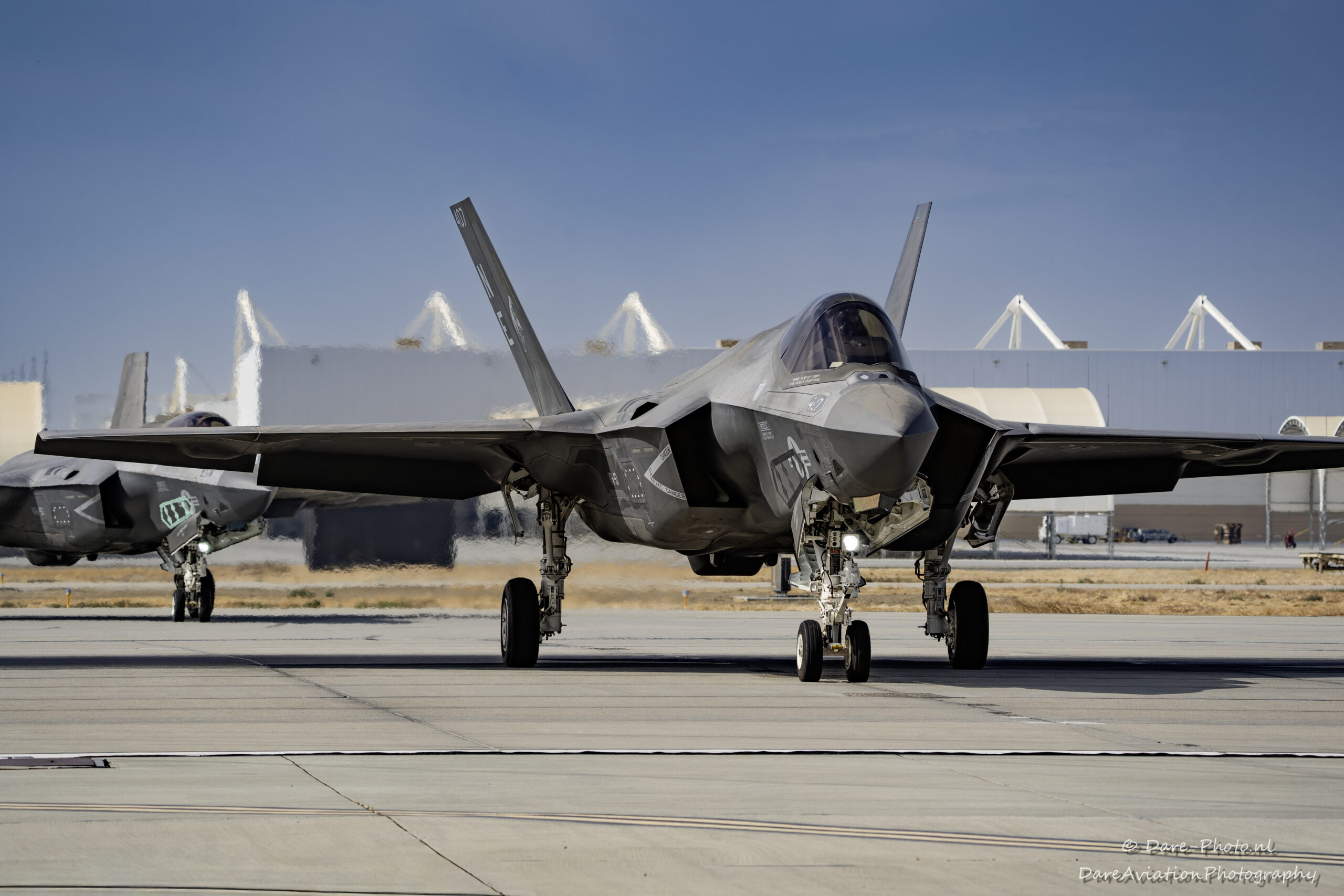
A mixture of F-35Cs from VFA-101 ‘Grim Reapers’, VFA-125 ‘Rough Raiders’ and eventually VFA-147 ‘Argonauts’, all assigned to the Commander Joint Strike Fighter Wing (JSFW), were used to facilitate the training and certification of the first operational F-35C squadron. VFA-147 received its first aircraft on the books in September 2018. Since the F-35C does not have a two-seat trainer variant, the basic training principles were provided using the full-mission simulator. For training purposes, several simulators are implemented at NAS Lemoore with additional simulator assets scheduled for delivery as the program evolved at NAS Lemoore. AT Chief Joseph Walter of VFA-125 stated in October 2018 “the simulator is very accurate and resembles the real-time situation to a very high detail.” After almost three months of simulator training, on 18 April 2018 VFA-147 personnel conducted their first flight on the F-35C.
On October 19, 2018, Capt. McCoy issued the Argonauts the interim safe-for-flight operations certification status. The finalization of the safe-for-flight operations certification process ensures that the squadron has sufficient qualified personnel to implement safety and maintenance programs in support of fleet operations. Once the squadron had independently completed carrier operations, they received the full safe for flight operations certification.
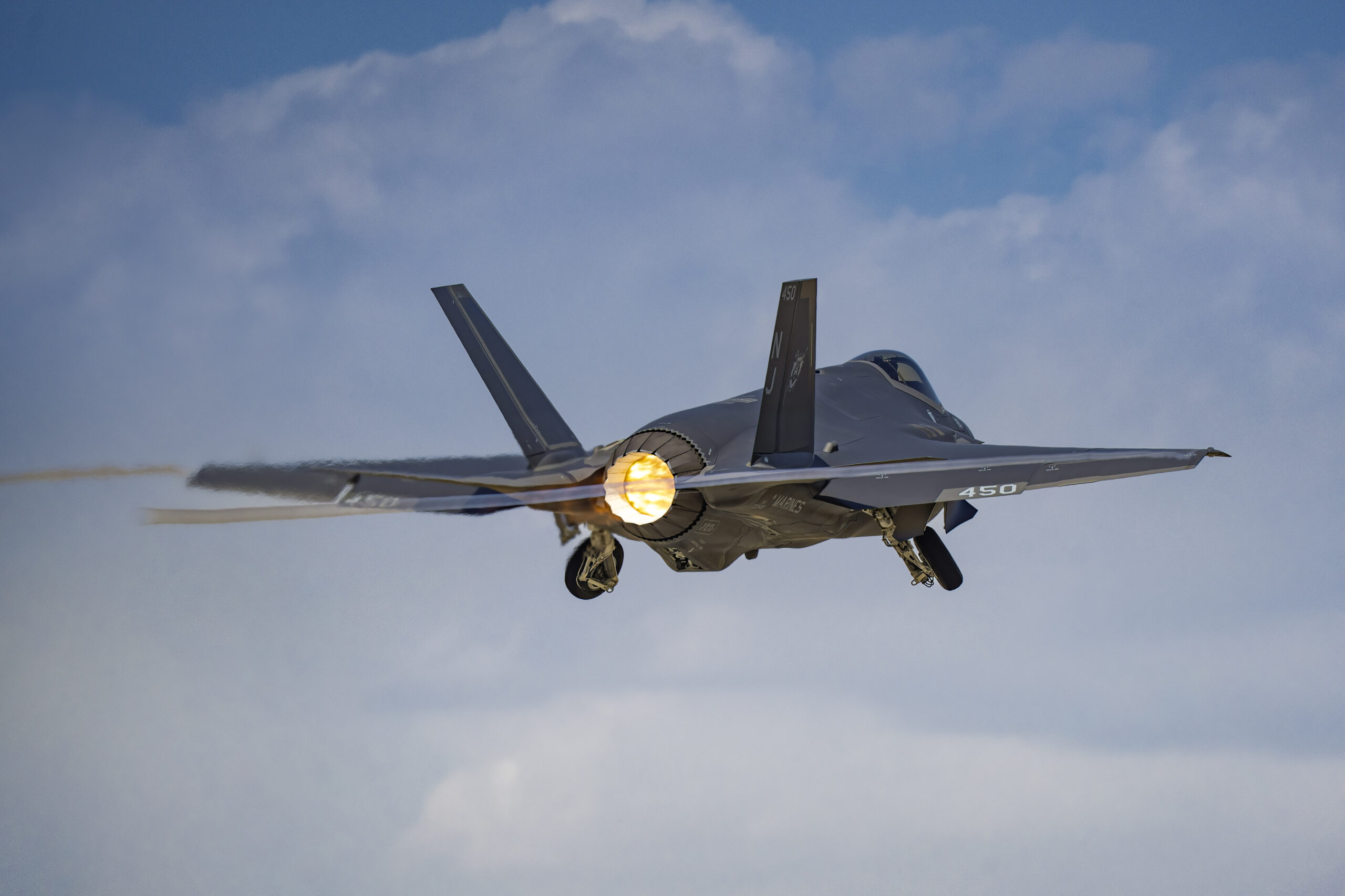
The following step in the implementation process was the successful integration of the aircraft into the operational Fleet. This was scheduled to start in February 2019, preparing for the first actual deployment of the ‘Argonauts’ in 2021 embarked on USS Carl Vinson (CVN-70). On March 1, 2019, it was announced that VFA-147 was to transfer from CVW-11 to CVW-2 to be embarked on USS Carl Vinson’s next deployment. USS Carl Vinson left Naval Air Station North Island for their deployment on August 2, 2021 returning on February 14, 2022. This deployment was referred to as the “Air Wing of the Future” (AWOTF) cruise as the CVW had the latest state-of-the-art technology in their operational inventory.
Operational Deployments and Evolution
By the mid-2020s, F-35C squadrons under the Joint Strike Fighter Wing had deployed aboard multiple carriers, including the USS Carl Vinson and USS Abraham Lincoln, with integration into Carrier Air Wing 2 and Carrier Air Wing 9. These deployments proved the F-35C’s value in distributed maritime operations, long-range strike, and as an intelligence, surveillance, and reconnaissance (ISR) asset supporting the entire carrier strike group.
International exercises have also highlighted the wing’s role in coalition interoperability, with the F-35C working alongside Marine Corps F-35Bs and allied F-35As from NATO and Pacific partners.
While embarked on USS Carl Vinson, VFA-147’s jets developed a reddish-brown coloring across large areas of the airframe; the noted effect raised questions concerning the maintainability of the stealth-enhancing paint coating in an aggressive maritime environment coupled with jet efflux and extreme weather conditions on the flight deck.
A report was filed by the US Government Accountability Office (GAO) on December 16, 2010. This report was produced as the House Armed Services Committee expressed their concerns that the lessons learned regarding the prevention and management of corrosion in the F-22 Raptor had not been fully applied to the development and acquisition of the F-35 Joint Strike Fighter. Although the conclusions are not clear, including the actions taken.
The first F-35C deployment was also marred by landing mishap. On January 24, 2022, an F-35C Bureau Number 169304/NE-406 crashed onto the flight deck of USS Carl Vinson which was operating in the South China Sea. The pilot safely ejected, and the aircraft skidded off the flight deck and into the sea.
This accident was the result of a pilot error. The pilot attempted an expedited recovery breaking overhead the carrier, an approved and common maneuver, but the pilot never performed this maneuver before and it reduced the amount of time to configure the aircraft and conduct landing checks. As a result of the compressed timeline and the pilot’s lack of familiarity with the maneuver, the pilot lost situational awareness and failed to complete his landing checklist. Specifically, the pilot remained in manual mode when he should have been (and thought he was) in an automated command mode designed to reduce pilot workload during landings. On March 2, 2022, the F-35C was recovered and the root cause of the accident was further investigated.
Takin’ it to the Fleet
In September 2019 the next squadron to perform the conversion to the F-35C was announced. Strike Fighter Squadron VFA-97 ‘Warhawks’ had been selected as the next squadron to start their conversion to the F-35C Lightning II in February 2021. VFA-97 performed their last F/A-18E mission from NAS Lemoore, California on February 26, 2021 and started their F-35 conversion.
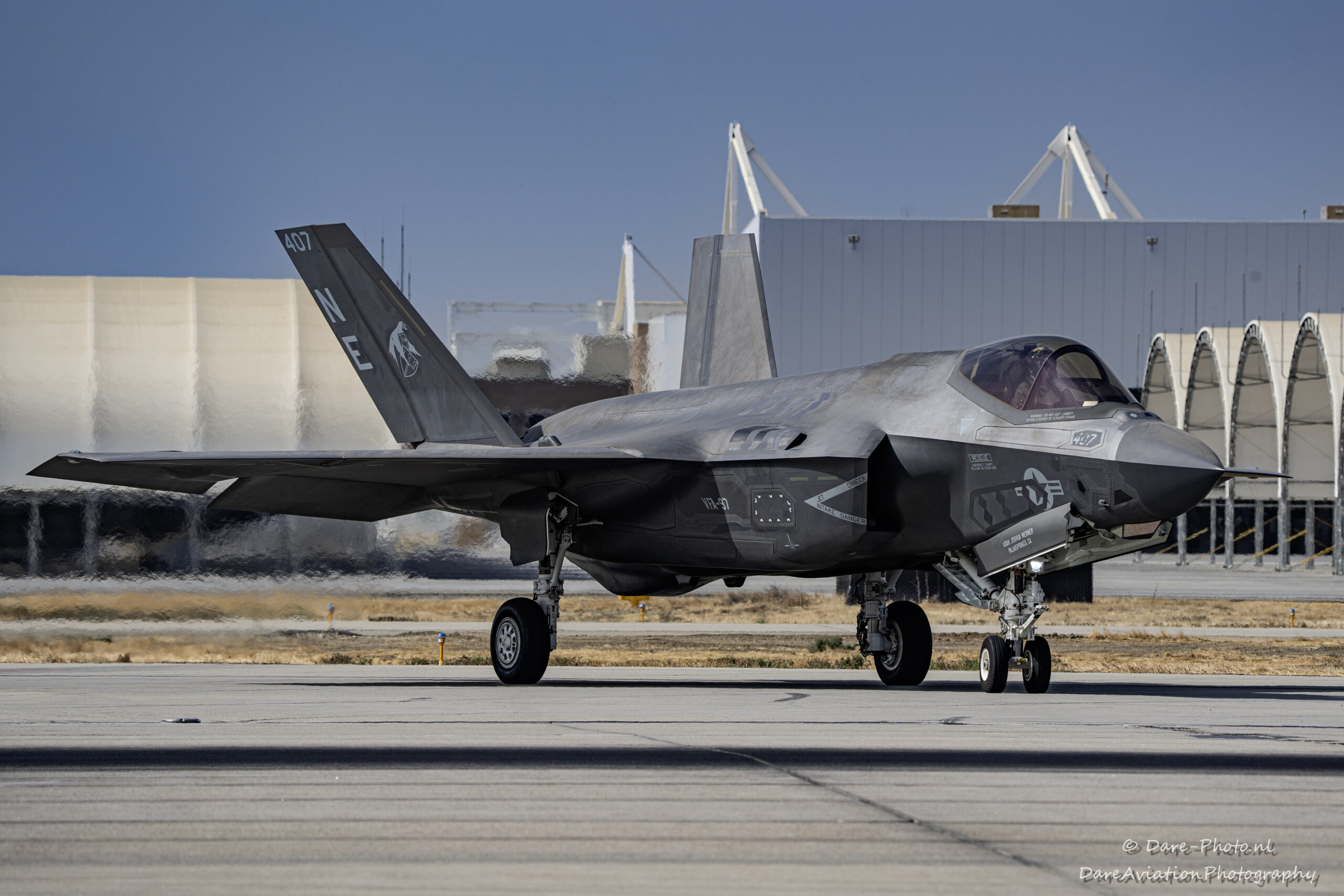
A year later on February 18, 2022, VFA-97 ‘Warhawks’ achieved their Safe for Flight Operations Certification (SFFOC) status completing their conversion to the F-35C Lightning II. The squadron received their first F-35Cs in October 2021 and were reassigned to Carrier Air Wing (CVW-)2. The ‘Warhawks’ under the leadership of Commander Thomas R. Bock successfully completed a high pace training cycle to prepare for deployment in less than half the time available. The completion of Composite Training Unit Exercise (COMPTUEX) marked the last training evolution for the squadron prior to their deployment to the Indo-Pacific.
The ‘Warhawks’ excelled in each step of their training during four separate exercises. Two training cycles were completed at the Naval Aviation Warfighting Development Center (NAWDC) at NAS Fallon, Nevada, and two embarked training evolutions on USS Carl Vinson. For their first deployment the ‘Warhawks’ were embarked on USS Carl Vinson as well, assigned to CVW-2 between October 12, 2023 and February 23, 2024 for a WestPac cruise. For their second training cycle between June 12, 2024 and August 15, 2024 the ‘Warhawks’ conducted RIMPAC 2024 in the Hawaiian Operating Areas while embarked on USS Carl Vinson, still assigned to CVW-2.
The ‘Warhawks’ quickly took the place of VFA-147 “Argonauts’ previously assigned to CVW-2, to prepare the ‘Argonauts’ for their planned homeport change to Marine Corps Air Station MCAS Iwakuni, Japan, while maintaining noteworthy Mission Capable rates. The squadron further executed previously planned Joint Strike Fighter Wing Lightning Sustainment Inspections (LSI) and readily adopted and executed the new F-35 fleet-wide Tier 2 Corrosion Production Aircraft Inspection Requirement (PAIR) that was based on the LSI.
VFA-97 ‘Warhawks’ was deployed on USS Carl Vinson as a part of Carrier Strike Group ONE (CSG-1). Their deployment to the US 5th and 7th Fleet area of operations (AOR) started on November 18, 2024 and it returned to its homeport in San Diego on August 14 2025
A growing Lighting community
In 2022 VFA-86 ‘Sidewinders’ – after eleven years of operating the F/A-18E Super Hornet – was selected to be the third and next squadron to start their conversion to the F-35C Lightning II.
In 2023 VFA-86 ‘Sidewinders’ completed their conversion to the F-35C. In total 200 personnel completed their conversion training at Eglin AFB and NAS Lemoore while nine pilots were in the process of completing their flight syllabus with VFA-125 ‘Rough Raiders’, while simultaneously executing tactical training events with NAWDC (including TOPGUN) at NAS Fallon.
After completing these key milestones, including the Conventional Weapons Technical Proficiency Inspection and the Maintenance Program Assist inspection, VFA-86 earned their interim Safe for Flight certification in June 2024. In July, they conducted their first embarked operations aboard USS Nimitz (CVN-68), culminating in full Safe for Flight certification. The ‘Sidewinders’ achieved their full Safe for Flight certification in October 2024.
Upon completion of their conversion training, VFA-86 remained with Commander Joint Strike Fighter Wing (CJSFW) pending assignment to CVW-11 and will deploy aboard USS Theodore Roosevelt (CVN-71) in 2026.
With the relocation of Strike Fighter Squadron VFA-147 ‘Argonauts’ to Marine Corps Air Station (MCAS) Iwakuni, Japan, in October 2024, changing places with VFA-115 ‘Eagles’ which moved to NAS Lemoore, California in July 2024. VFA-115 was initially based at NAF Atsugi, Japan since December 2009, later relocated to MCAS Iwakuni since November 28, 2017, assigned to CVW-5. They performed their ‘last ride’ with CVW-5 aboard USS Ronald Reagan over May-July 2024 as the carrier itself also returned to the USA for replacement in Japan by USS George Washington (CVN-73).
VFA-115 ‘Eagles’ ended F/A-18E Super Hornet operations on January 7, 2025 and will be the fourth Navy squadron to start their conversion to F-35Cs, which will be of production Lot 17 standard. VFA-115 will be the first CVW-17 F-35C squadron, and will deploy aboard USS Ronald Reagan (CVN-76) in 2027.
A hundred Lightning bolts
The integration of the F-35C Lightning II into the operational carrier air wings continues to define new benchmarks, showcasing the evolution of United States Naval Aviation. These developments are supporting the vision and mission in which the F-35Cs growing role in maintaining air superiority at sea is progressing at a steady pass.
On December 17, 2024, Lockheed Martin recently announced the delivery of the 100th F-35C Lightning II fifth-generation fighter jet, marking a new milestone for the program. The aircraft manufactured under construction number CF-100, USN Bureau Number 170543, was noted during a test flight at Fort Worth, Texas, on 16 November 2024 and its delivery took place in December 2024 to VFA-125 at Lemoore. Although that’s officially the hundredth F-35C built, they are not always delivered in the same order of manufacture. This milestone followed the earlier delivery of the thousandth F-35 across all variants earlier in the year. The Navy plans to acquire 273 F-35Cs to complement its F/A-18E/F Super Hornets and has completed the replacement of its older F/A-18C/D models. Meanwhile the USMC has a program of record for 67 F-35Cs.
The F-35C program’s recent milestones underscore its strategic importance to the Navy’s future. With its advanced avionics, stealth capabilities, and adaptability for carrier operations, the F-35C continues to redefine what is possible for naval aviation. As additional squadrons will start their transition and deployments become more routine, the aircraft solidifies its place as a cornerstone of modern maritime defense.
Conclusion
From its establishment in 2020, the Joint Strike Fighter Wing has been at the forefront of integrating the Navy’s most advanced strike fighter into fleet operations. By managing training, readiness, and tactical development for all F-35C squadrons, the wing ensures that the carrier strike group of the future can project power in contested environments, maintain air dominance, and operate seamlessly with joint and allied forces.
The JSFW stands today as both a symbol of naval aviation’s transition to fifth-generation warfare and a practical instrument for sustaining the Navy’s global reach in an era of great power competition.
The Joint Strike Fighter Wing’s evolution from 2010 to 2025 mirrors the broader trajectory of the Navy’s entry into the fifth-generation era. What began as shipboard trials and developmental testing matured into a wing that now provides stealth, electronic warfare, and sensor-fused strike capability at the heart of the carrier air wing.
Through its establishment in 2020 and its successive operational deployments, the JSFW has cemented itself as the Navy’s bridge between the Super Hornet-dominated present and the fifth-generation future of naval aviation.